Category: Travel

  • Exoticism

    Exoticism

    Let me just say this: there is no good or bad way to travel – just as there is no “exotic” or “mundane” experience in it. Sometimes I wonder if consumerism is the sorcerer that conjures up this endless stream of ridiculous adjectives for something as simple as travel – something that doesn’t need them – for ordinary people to whom it comes as naturally as food or sex, often even becoming a prerequisite for both.

    It’s not hard to see the sorcerer has an agenda. He is on the payroll of giant conglomerates that want you to believe you could live a fuller life – if only you could forget what you instinctively understand – if only you have a pocket deep enough – to consume more. So he creates an array of hypnotizing images of commercial districts in distant lands to manufacture desire and maximize spending.

    What’s unfortunate is that such images always – almost methodically – exclude the backstreets and alleyways, where the mundane is taking place.

    Would you really risk missing out on the “exotic”? the sorcerer asks. And without fully understanding the malignancy of the question – which, as framed, only invites a resounding “no” – we nod along and seek comfort in his hypnotic world.

    Are we too blind to notice the manipulation, the malignancy, the exploitation, the deception?

    Travel doesn’t lend itself to being neatly divided into “exotic” and “mundane.” This framing is intentionally employed by agents and beneficiaries of capitalism to subtly pressure people into chasing the exotic, as if failure to do so somehow diminishes the journey. Still, the division offers a useful entry point for my counterview.

    For me, travel is an extension of the mundane – a spectrum of unfiltered experiences stretching between the exotic and the not-so-exotic.

    A meat shop under a Neem tree

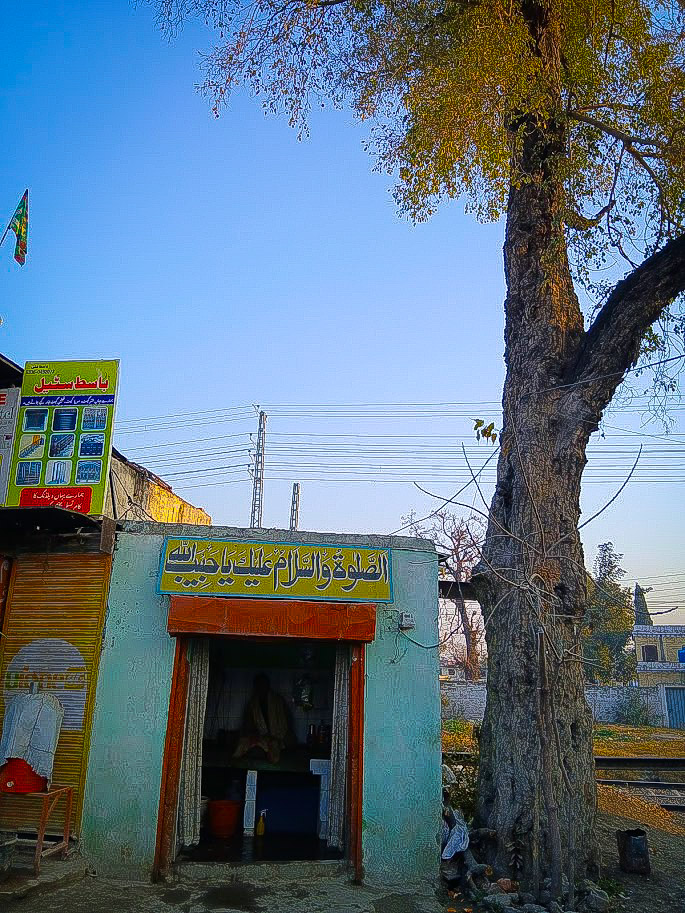
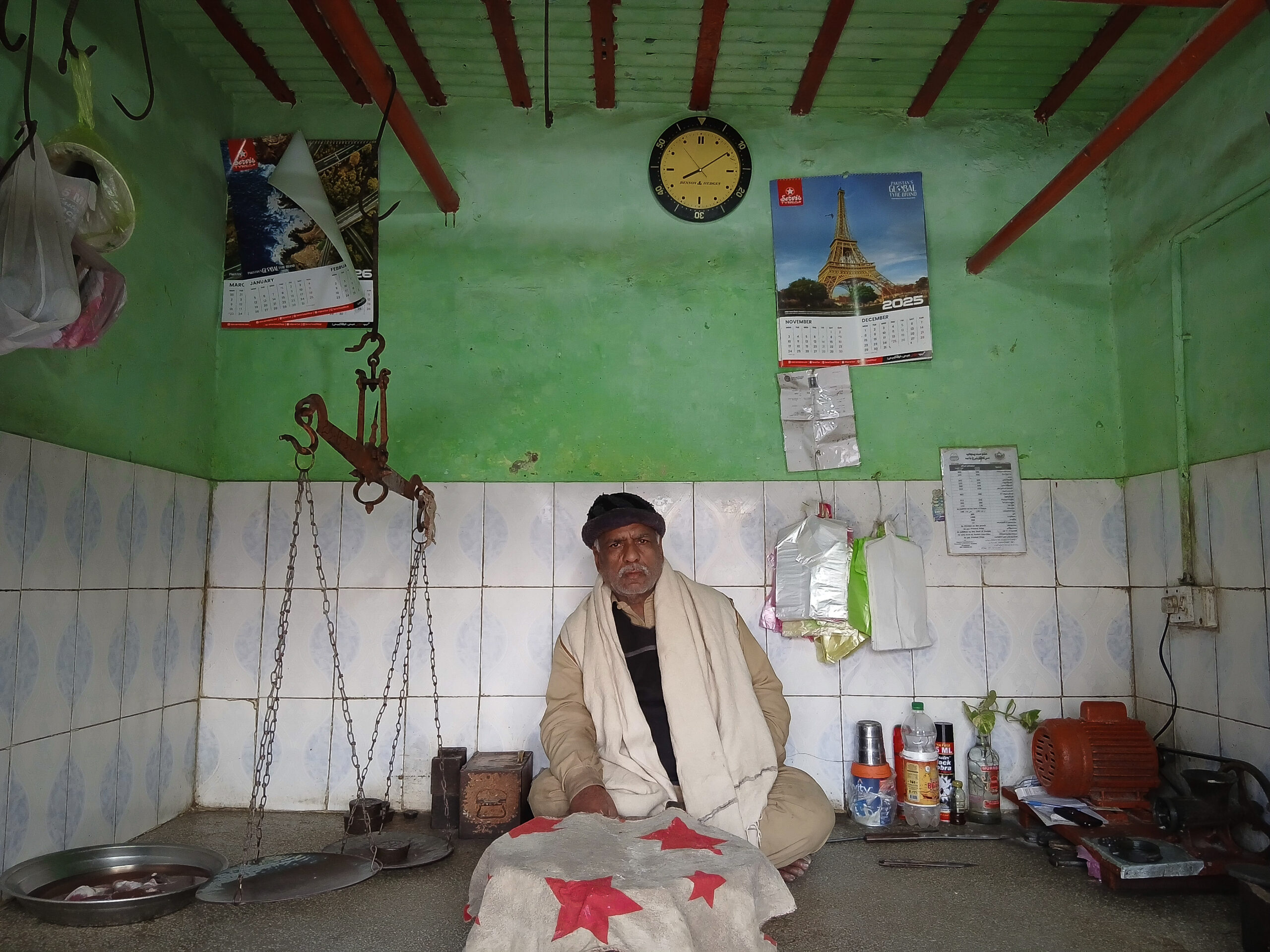
    The figures that populate this spectrum are not rare. They are everywhere. A bus ride brings you face to face with individuals carrying what feels like ancient, unspoken knowledge. Urban centers are filled with men quietly enduring chaos, homesick for their peaceful, distant villages. There are small-time teachers who sit across from you on a train whose influence echoes far beyond their modest circumstances, and tradesmen – like a butcher waiting under a Neem tree in a modest shop – for whom the day’s rhythm is dictated not by aspiration, but by arrival: of the distributor, the meat, the customers.

    The grand, mysterious butcher

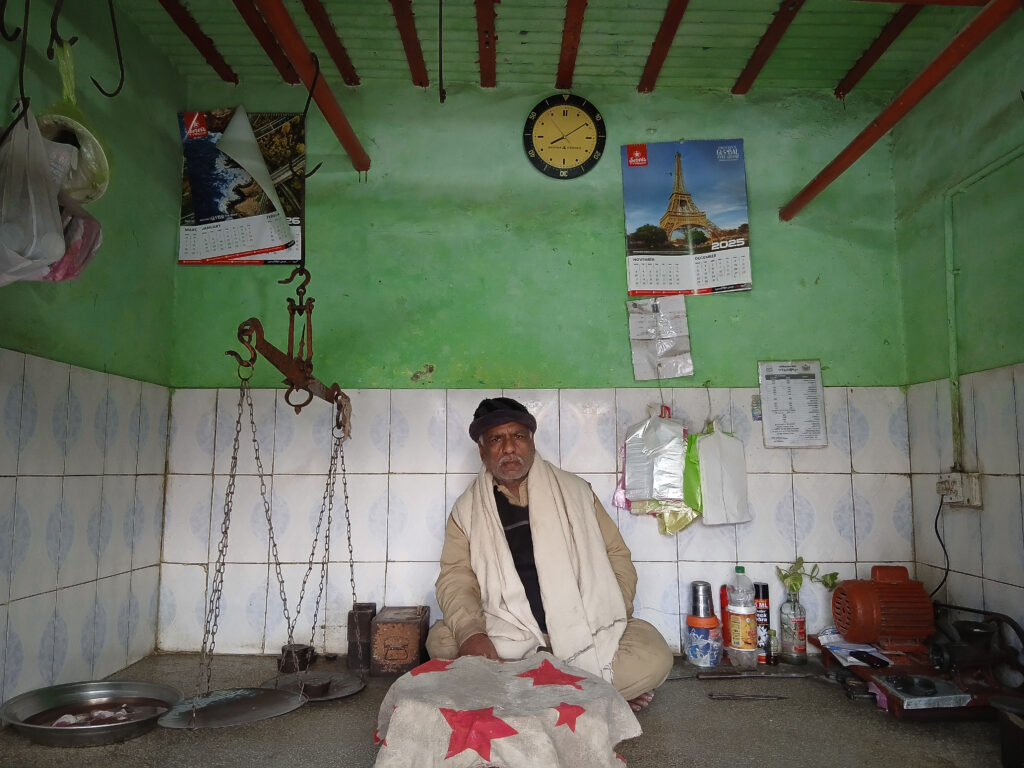
    What I mean is that this butcher under the Neem tree will never regard your itinerary – the need to reach somewhere and check items off your bucket list. He simply sits barefoot and cross-legged, an abundance of calendars hanging above and a rusty mechanical balance beside him, an air of mystery surrounding him, a woollen shawl draped over his stocky shoulders, in his tiny shop, splashed in delightful turquoise and rust colors in a small bazaar next to the railway lines in old Rawalpindi.

    He demands your attention right now, at this very moment.

    Soon, the soft morning light will shift; the distributor will arrive. The idle butcher will become a busy butcher, hiding himself – and his cheap calendars and delightful walls – behind a thick curtain of beef carcasses hanging from the front hooks. You will not catch him on your way back – if that is what you had in mind – because by then he will be lost in the cacophony and bustle of the bazaar.

    To assume he can be revisited later is a mistake. He cannot. And perhaps there is a quiet, inevitable penalty in this – not merely for being preoccupied with checklists and destinations, but for compulsively seeking the exotic while the very thing we are searching for sits, unacknowledged, in the guise of the mundane right under our nose.

  • Voyeurism

    Voyeurism

    Much of my knowledge about the world is derived from peeking through windows. They are made of glass and plywood, flesh and bone, brick and mortar, cast iron and air, and exist just about everywhere I have been, opening portals into other dimensions. It feels voyeuristic to look at something so intimate – someone so vulnerable – without knowing anything about them. It becomes a secret you would carry as you move swiftly from one window to the next, collecting more. The joy of seeing what you are not supposed to keeps you lightheaded, almost dizzy – until those secrets weigh you down and transform you into someone else. It’s exactly that someone else who is writing this blog.

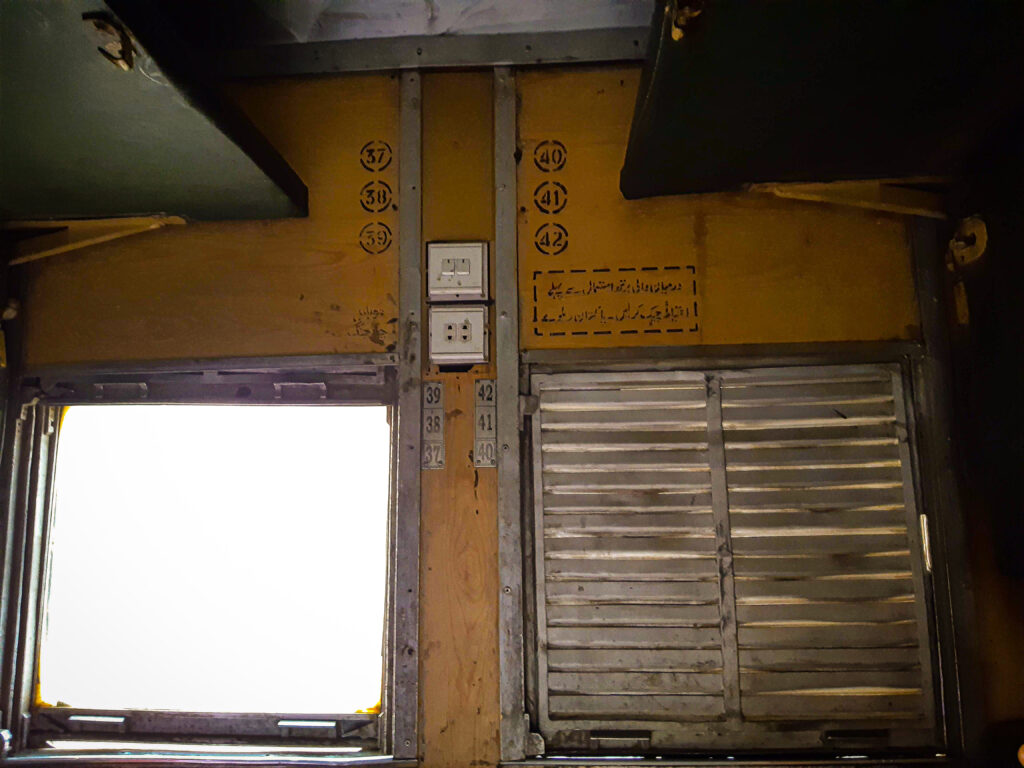
    A pair of economy class cabin windows of Khyber Mail train in Pakistan

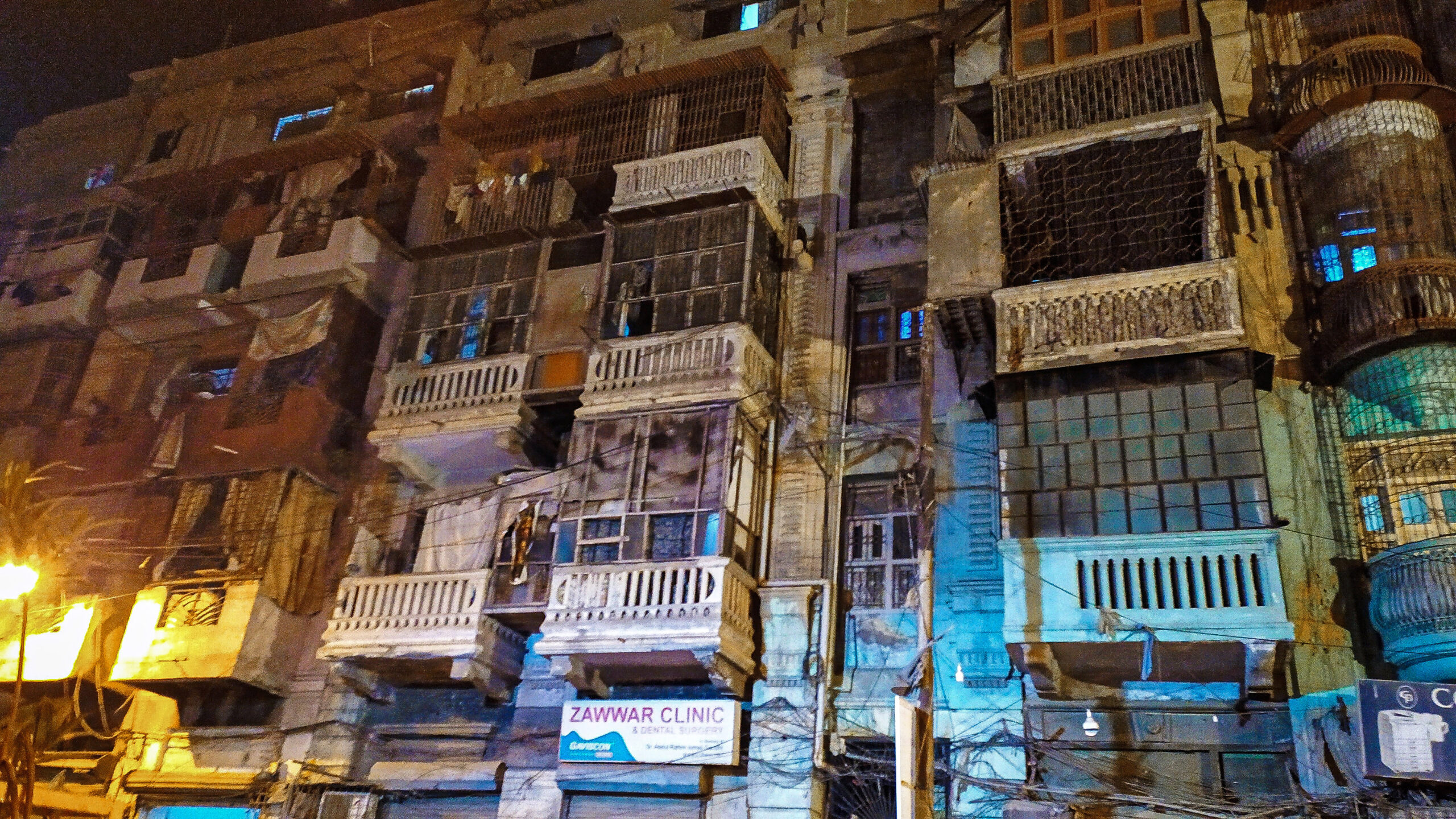
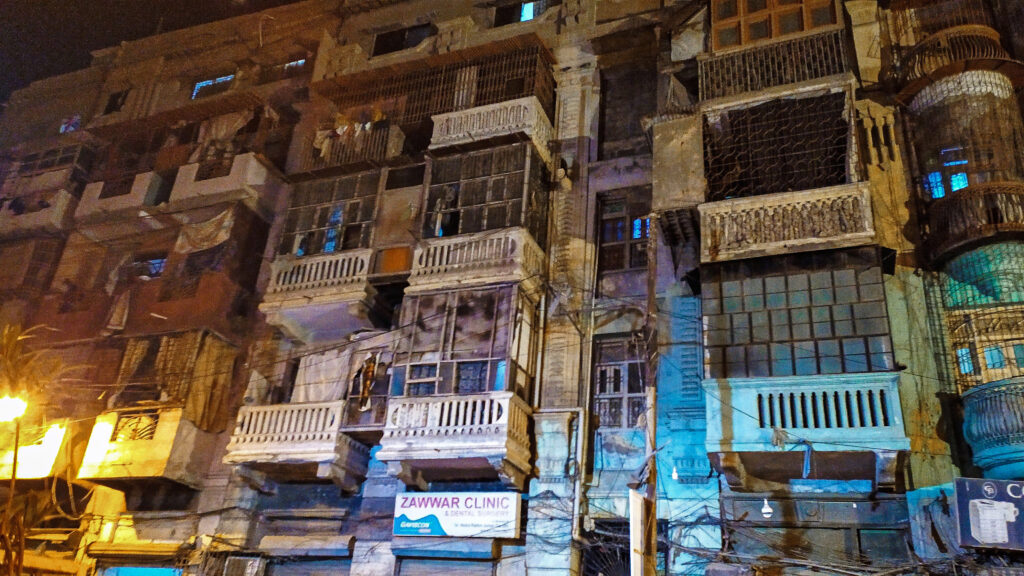
    Imagine, for a while, you are a Peeping Tom like me – curious about every window you come across, wondering why it’s there, gripped by a quiet, almost painful curiosity about what might be happening behind it. These are not the kind of windows that draw their curtains or swing shut when they sense someone lurking. These are windows that want be looked into – offering a tantalizing view of exhibitionists of circumstance, constantly exposing themselves, curled in strange positions in remarkable places. Windows most people are too busy to notice, revealing lives that are quietly unfolding while the rest of us rush to get somewhere else.

    An abundance of windows in Saddar, Karachi

    It’s not so much the window as the world it leads to. Think of it as an exotic strip club that’s only for the soul. It inspires a kind of awe: the same unsettled fascination I once felt while scrolling through Wikipedia’s page on voyeurism, where a photograph captures a young woman exposing herself in a public square in Budapest. ‘Appropriately dressed’ middle-aged women pass her by, their faces caught somewhere between disapproval and reluctant curiosity – perhaps because they notice their husbands looking.

    It is an uncomfortable image. Not because of what is exposed, but because of what it reveals: that vulnerability and beauty do not have to be opposites – and that, we are all, in some quiet way, looking, even if too disapprovingly to truly see.

    It requires a shift in temperament – a kind of practiced defiance – to hold your ground when these windows appear out of nowhere, when every instinct urges you to retreat. I have been there long enough not to look away when they open.

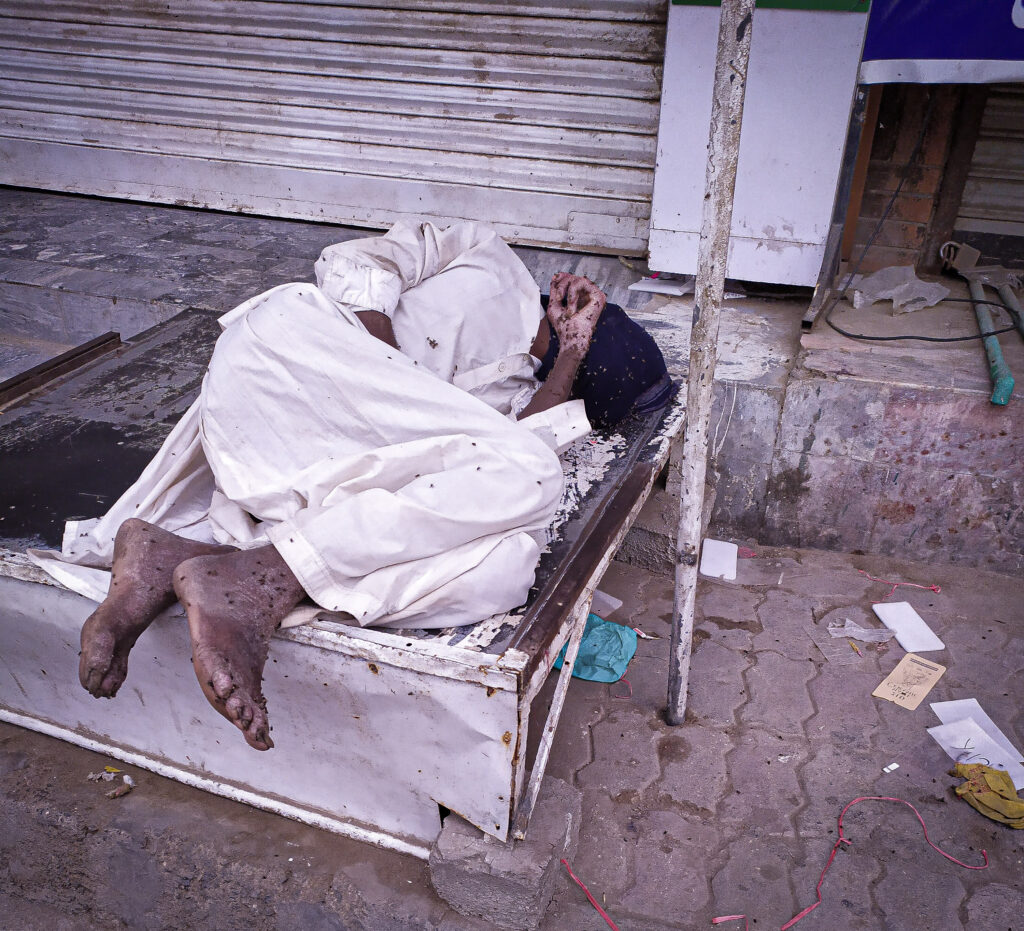
    Here is the homeless man with curled, overgrown nails, covered in a blanket of flies, sleeping like an embryo on a vendor stand – as if it were the only womb he ever knew – on a sprawling square outside Rahim Yar Khan railway station. I knew instantly: that was my window, and I had to stop and watch.

    Unsurprisingly, people went to great trouble pretending he did not exist – as if he were a glitch, an aberration, an ugly patch best ignored. They changed their path or turned away while passing, their comfort unperturbed. When I took out my camera, they were almost offended – as if I had broken the fragile web of pretence they had so carefully woven.

    Life as a spectator is not as hollow as motivational speakers make it out to be. “Take the wheel”, they say, fists in the air – but they fail to tell you at what cost. Being at the wheel, at times, means focusing so hard on the road that you miss the wild grass along the shoulder, dancing in the afternoon wind. They may go so far as to tell you it’s futile to water it but some would do it anyway.

    Those seen watering the wild grass were thought to be insane by those who couldn’t see it dance.

  • Surreal

    Partly because the sleeping beauty resting in the snowcapped mountains looked stunning in her new white wardrobe, partly because the low hanging clouds huddled together to look like a giant fluff of cotton candy from the cockpit, partly because the piercing though strangely welcome cold was vaguely reminiscent of all the places I could have been and partly because the dome-shaped Gol Canteen’s hearty breakfast of anda channa and creamy tea with rainbow-colored froth warmed me up to the cold outside, I descended into a reflective, almost meditative mood after landing in Quetta and felt the urge to write. Sitting in the heated room with a vase-shaped lamp lit up dimly in a corner and an expansive window overlooking the dark, overcast day and a giant mountain just standing grimly and letting gray clouds float above it, I feel a mix of many emotions which, were they to be defined in a word, could be summed up in nothing short of ‘gratitude’.

    Strange how an encounter with Beauty makes one want to worship or at least, be grateful to some higher entity that afforded that encounter. It’s almost an involuntary reaction, as swift and natural as scrambling for balance when falling or crossing your arms when cold. I know the excitement is going to wane in my weeks of staying here, the welcoming cold would start to bite, the snow-capped mountains would become drab, and the sleeping beauty and her outfit would no longer look stunning, if I still trace her figure in the mountains at all.

    In fleeting moments like these, when there is no rush to get anywhere, the cognition of the surrounding beauty is overpowering, my mind is not drifting elsewhere and I don’t desire anyone or anything that’s not right before me, that I truly feel in the moment right where I actually am. I hope as the years go by, this blog entry reminds me of my early enchantment with the wintery Quetta and helps to preserve it for a little longer.

  • On Sea and Nostalgia

    On Sea and Nostalgia

    The Nani Ami’s house turns dark and cold in Karachi’s winters. Back in childhood, I could not imagine that sunlight would ever go scarce in a house that had large open verandahs on its front and back. When we visited from South Punjab during summers, the image of white curtains and bedsheets fluttering in the seawind breezing through Nani Ami’s west-open house that lay before us drenched in a nice warm tinge always cast a spell on me and promised a summer filled with adventure.

    Times have changed and Karachi’s uncontrollable Frankenstein of commercialization has successfully turned the diverse neighborhood of low-walled houses painted in sprightly colors and adorned with trees and leafy plants into ominous uniform megastructures whose bold edifices look cold and alien, and block all the sunlight from the sparse independent houses that still remain. Wrapped in blankets, trying to fight off the melancholic gloom that accompanies the cold darkness, we curse the tyrannical manifestations of capitalism at our doorstep and long for freedom. Someone said, ‘Hawkes Bay?’ and we all cried in unison, “Yes, please!”

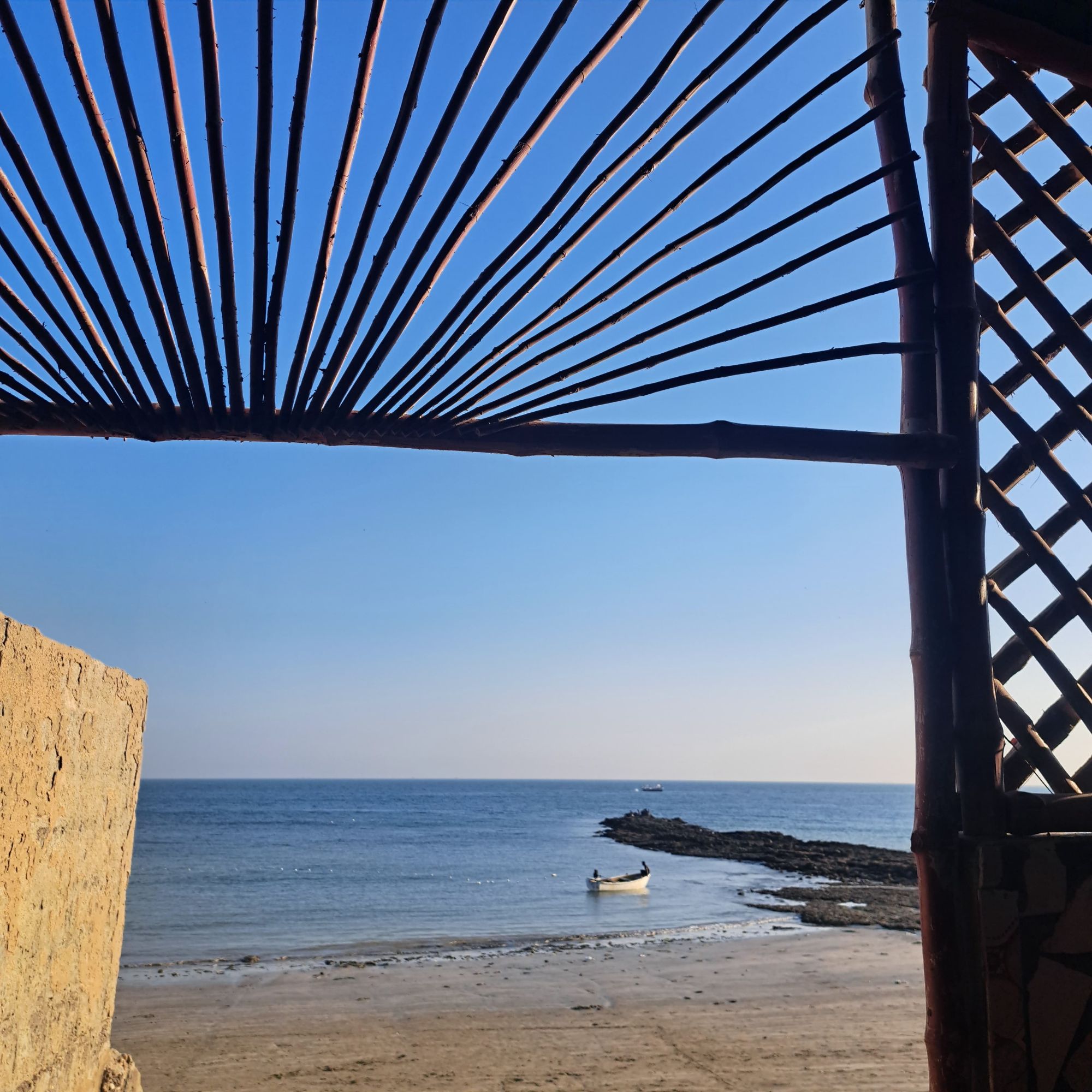
    Thanks to a rapidly piling list of epic adventures that our group of maternal cousins including their families had been logging lately, we were not afraid to pitch the idea to them first and see if it garnered interest. Their keen response sent us in a flurry of preparations necessary for a picnic on the beach. The night before, a Hiace had been rented, attires decided upon, a football packed in, and we were pretty much go for the day ahead. The cousins joined us the next morning with a cricket bat, badminton rackets and an assortment of indoor card and board games. Soon we piled up into the Hiace which, despite our doubts, proved spacious and sufficiently comfortable for our purposes. The formidable driver glided over the potholed roads of Karachi. A fateful turn towards the Turtle Beach proved disappointing with its nondescript beachfront and pocket breaking hut rents. We now turned to the Hawkes Bay, missed it once, almost barged into the French Beach but were fought off by the valiant guards protecting elite interests from commoners, returned once again to the Hawkes Bay and eventually found a budget-friendly hut with an exotic beachfront (after at least half a dozen hut evaluations). Without wasting a second, we offloaded, tiptoed over the round ocean stones and ran off in the warm sand to the shimmering blue calling waves.

    The sun shone brightly and we were so deprived that the kids rolled on the sand and made sandcastles, couples walked hand-in-hand along the waves lapping up against their feet, then we all played cricket and dodge-the-ball, and juggled some football. The fair ladies shrugged off the looming threat of sunburn and turned the beach into a show of colors with their spectacular cricket performances. The Biryani from the nearby hotel shack tasted delicious and so did the evening tea with baqir khanis. From the beach, a long brown rock pier trailed away from the sand and the civilization behind it, into the majestic sea now reflecting a deeper shade of blue in the slanting rays of the sinking sun. As it began to cool off, we all headed to the rock pier to spend our final moments reflecting on the nature and capturing it in our camera frames.

    Since Nani Ami believes in leaving a place better than one entered it which also strikes a chord with me, we did our bit in cleaning the beach and picked some 25 kg of plastics and fishing net out of the sea.

    The city remained in turmoil that afternoon as more protests erupted due to mass killings of an ethnic minority last month. I reached home safely thanking God for being given another day and wondering if all Karachiites develop some sort of religious disposition and learn to be grateful for, what the first world may consider, ‘as little as’ merely survival. As I continue to reflect on where I want to settle and put down my roots, Karachi remains a formidable candidate in a list of international cities. May be I can live and thrive and escape harm my entire remaining life in a city fraught with violence as I did yesterday. Regardless of what the future holds, this fantastic trip has largely allayed my crippling fear of moving with the family in Karachi for now, not because the security situation has gotten any better but because I’m finding it home.

  • The Lake

    The Lake

    My mother-in-law had been pining for a trip to the lake since the day she had arrived so we finally decided to drive her up there and spend a night by the lakeside this weekend. It had been a while since I and Fatima had visited the lake anyway so I pushed my workout up from the usual afternoon to early morning and planned to set off after the Friday prayers.

    I like to keep my travel prep simple. The ritual involves going over three things: book, clothes and dress. The perk of traveling with my wife (apart from her cherishable company, of course) is that she takes care of everything else so I only have to worry about the first – a book that would go with the clear lake and skies, in this case. My bookshelf here is in a bit of a crisis since I’ve been lending out more books lately than I’m buying so it was to be a challenge to pick something uniquely suited to the occasion. But I soon realized I was mistaken when I noticed The Sheldon Book of Verse, an anthology of poems, tucked away in a dusty corner for God-knows-how-many years. I plucked out the paperback and took a moment to appreciate its handiness and vintage aesthetic appeal. Published in 1957, no wonder it was a relic from the past.

    As I drove down the M-9, the scenic Kirthar Mountains appeared on the driver’s side. It’s hard to ignore the distinctive mesas (i.e. flat-topped hills) standing solemnly in the barren wilderness. While I saw their distant figures behind the haze of smog every day while commuting back from work, it was a totally different experience to see them up close by the roadside. Ancient vagabonds riveted in space but traveling through time, I thought. For some reason unknown to me, the sight of these mountains in particular, and nature in general, is immensely liberating and awe-inspiring to me, offering a sense of humility and freedom from all that’s trivial. I rolled down my car window to take in the fresh winter afternoon.

    Stock photo of Kirthar Mountains

    Soon the wind turbines were visible on the passenger side. Hashir would be excited to see them but he was already asleep in his grandfather’s lap. As I got off the motorway and headed towards Jhampir, we realized we were snaking through the vast fields of wind turbines on both sides, their blades and towers now too imposing to take in a single glance. It took some five minutes of gentle patting on Hashir’s face to wake him up from the slumber he had drifted into during the past half hour, but the surprised smile that plastered itself on his dazed, still-sleepy face once he saw the giant structures made it worth the effort.

    The link road leading to Jhampir had several cattle farms belonging to Palari and Jakro tribes. A shrine (مزار شریف) would pop up every few kilometers reminding me of what M. A. Yusufi wrote about the shrines of sham saints in Sindh in his book, Aab-e-Gum:

    ان سے متعلق ہر چیز شریف ہے سواۓ صاحب مزار کے

    The road is surprisingly fine compared to what you expect a link road in interior Sindh to be like. But it gets deceptive further ahead as you find suspicious speed breakers in the middle of nowhere that can cause serious damage to your car if you aren’t vigilant. The link road culminates at a bridge over the railway crossing at Jhampir station. We were even able to show Hashir his first train up close while stopping by the same bridge on our way back.

    From there on, it’s a narrow 6 km road to the motel. The road is lined on both sides by acacia and sometimes, date-palm trees particularly as you head closer to the lake. Parchoon shops set up in tiny cabins and manned by stout, thick-mustached Sindhis donning traditional Sindhi caps make for an interesting sight. The peculiar, familiar scent associated with the sea for a Karachiite becomes noticeable much before the lake is even visible. Soon we are driving through the non-descript motel gate. The sun is still well above the horizon. We have managed to reach in time.

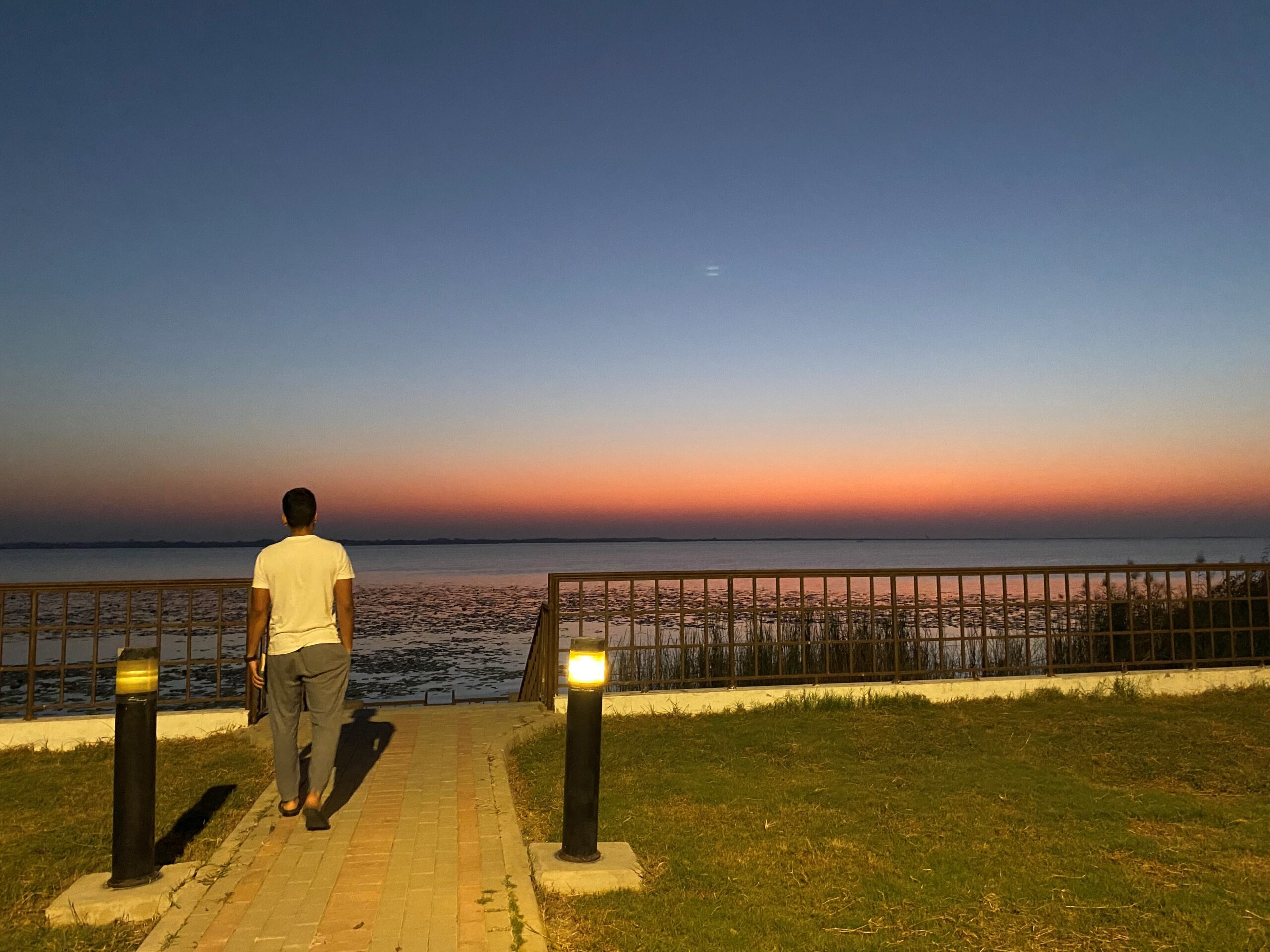
    The sun sets opposite the lake which means you can’t photograph the majestic lake sunsets you might have thought to capture on your way here. This can be a bit disappointing until you realize that it also means the sun would rise right above the lake the next morning. After a cup of tea and dinner, and a lot of sky- and lake-watching and mosquito-fighting in between, I snuggled up in bed with my book hoping to wake up to catch the first ray of sun the next day.

    I woke up in the morning twilight an hour before sunrise and headed straight out into the cold in my T-shirt and pajamas, anxious not to miss a single moment of the miracle that is a false dawn. Soon the fishing boats start to appear in distance; fishermen starting their day, rowing and setting up nets. Despite the biting cold none of us was prepared for (except me since my wonderful wife had packed in a hoodie), we gathered on the lawn in anticipation of the sunrise.

    The sun came up slowly and majestically from under the lake. Picture and video credits go to my sister-in-law who is a shutterbug and maintains an impressively artistic social media presence. Everybody basked in the warm sun while I and Fatima made breakfast in the rickety motel kitchen. In just a couple hours, the sun was high up in the sky and the lake began to simmer sending us back to our rooms. With the monumental event of the day over and the temperatures rising steadily, there was little else to do at the motel except pack our bags and get going.

    While the narrative of the story ends, the reflections, too many to recount here, demand a sequel which I will be writing shortly. Until then, Ciao!

  • Abandoned Cars

    Abandoned Cars

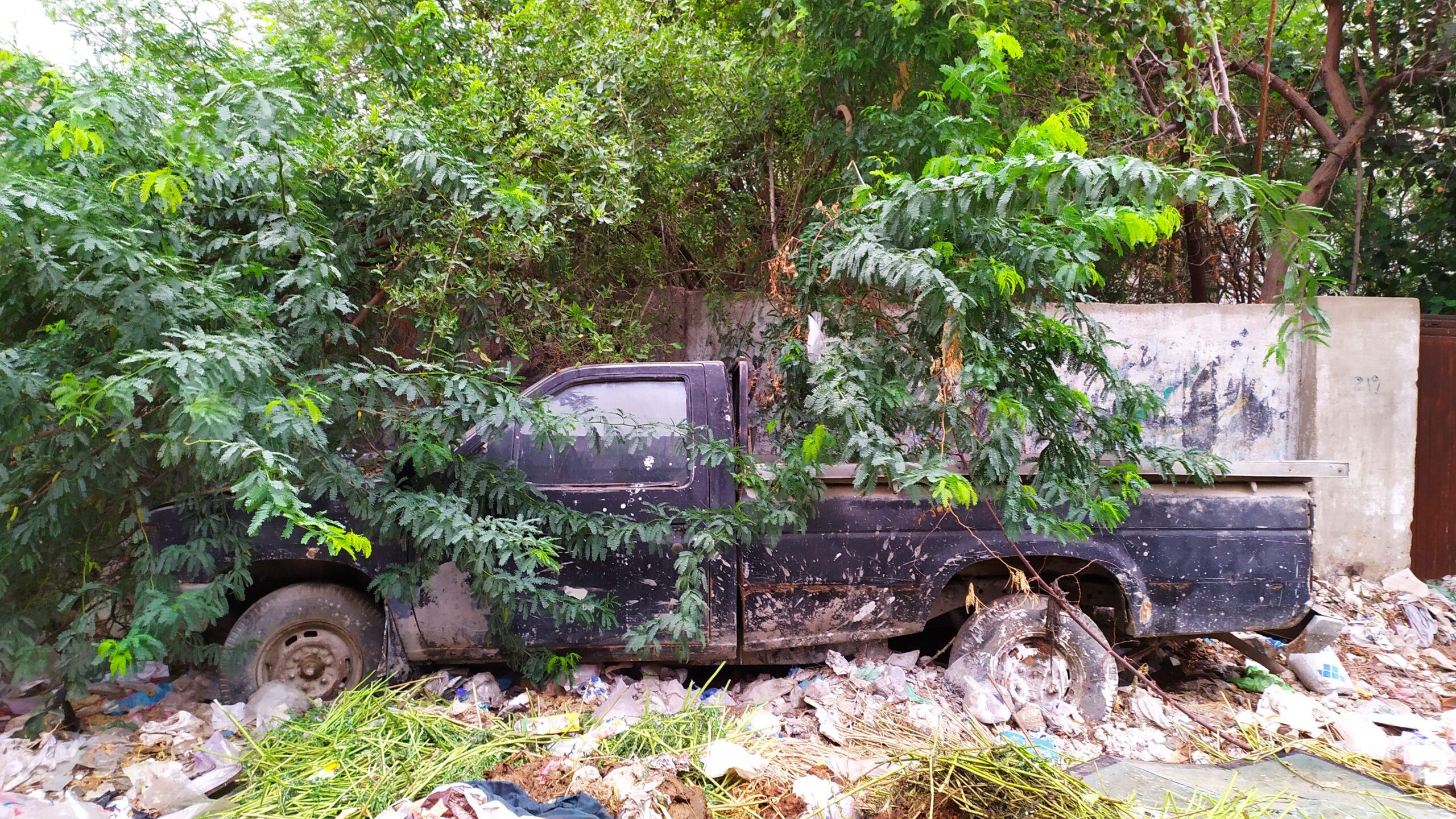
    My love for abandoned cars is fed by my running in urban areas. These neglected cars parked often in the leftover construction rubble, outside bodywork shops, or just in the roadside garbage dumps Karachi never seems to run short of, make for strangely nostalgic sights. These remind me of the fleetingness of the elaborate drama around us that would someday end without so much as a warning or fanfare, leaving us frozen in time like these rusting cars. When I’m not running against the clock, I like to pay them one final tribute before these are eventually dismantled or sold sheet-by-sheet and part-by-part by street addicts who thrive on such thrilling scavenger hunts abandoned cars can often provide.

  • A Walk in the Jamshed Quarters

    Saadat was not an easy catch.

    Ever since he had left, he appeared to be on the run. Away from the familiar faces. From the dreadful “whys”. From a hauntingly good career that was bad in personal ways. From himself. Toward himself.

    It took me half a dozen attempts to eventually get him to see me over a cup of tea one weekend last month. The plan was to catch up on the past year and a half in my favourite place in Karachi, the TDF Ghar rooftop cafe, while watching the metropolitan sunset skies spanning over the bustling MA Jinnah Rd. As I showed up ahead of time to make a reservation, I was barred from going upstairs by a barista saying Saturdays were family-only. I chuckled to him that he’d sure as hell let me in if I paired up with one of the girls roaming about. He nodded back in all seriousness leaving no doubt in our deal being a no-go tonight.

    Saadat showed up almost on time in khakis and a tartan plaid button-down, carrying his usual charismatic smile, looking cheerful and vivacious; certainly not a deer in the headlights. I have visited old friends before, only to find out I did not recognize them anymore but Saadat was a relief to see. People perhaps take longer to change beyond recognition. It’s perhaps even selfish to expect they wouldn’t change when we don’t have the faintest idea of what’s going on in their lives. I cleared up my head clouding with philosophical queries. I had to be in the moment. For the sake of this rare weekend away from work, the sunset smelling of sea and life, the streets of old Karachi before me as inviting as a ripe woman and an old friend who’s still recognizable!

    Now that our evening tea in the cafe was down the drain, I remembered I had a shoe to be mended so we took off in the labyrinthine streets under the lavendar skies of Jamshed Quarters in search of a road-side cobbler. Our mundane conversation happened in the music of silencer-less bikes sputtering away, birds getting noisy on a tree beside a street-shrine of sorts and the melodious azaan for Maghreb prayers. Under the curious stares of street dogs, loafing teens and disapproving worshippers, off we walked and wondered if cafes and their expensive food were any better than the poetry of the narrow streets and the twilight shadows floating through them.

    Besides being a friend, Saadat has been a really interesting character to me ever since he has taken “the decision”. The way he risked his comfort, security and status, basically all he had deservedly achieved in his early twenties, over a ‘turn of pitch-and-toss’ is reminiscent of the poem “If” by Rudyard Kipling. He wouldn’t have someone dictate their terms to him which is quite bossy, if you ask me, and manly if you ask Kipling. It’s something that sets him apart from the crowd. I value this rarity in a man.

    Anyway, as the twilight gave way to the pitch dark of the night, and the familiar shadows started lurking in distance, we decided to call it a night. As long as he’s here, I look forward to seeing him as often as I can, or not at all if he can’t; but I’m more interested in preserving the endless meetups and conversations we have already had. They hold enough drama and humor to last a lifetime; as long as I’m able to preserve.

  • Cooling Vesuvius

    Having a cup of tea with you

    in a ramshackle dhaba by the road

    reminds me of Frank O’ Hara’s iconic poem,

    ‘Having a Coke with You.’

    The cold dusk has just fallen

    upon the October Himalayan mountains

    casting their shapeless silhouettes against a lavender sky,

    and upon us

    as we hold our cups

    over the glittering city of Muzaffarabad

    and gaze into the darkening cirrus afar,

    a new moon rising above them and the majestic North star,

    reflecting on the beauty of this fleeting moment.

    The gray steam rising from our porcelain cups

    merges in the condensation of our winter breaths

    creating patterns envied by

    jet contrails and shooting stars.

    The metallic road by our side

    snakes up to the shrine of the Saint of Chinasi

    reminding me of a similar road in Naples

    that leads up to Mount Vesuvius’ top

    whose raging volcano once buried

    the debaucherous Pompeii alive.

    Perhaps you think

    that in our three years of togetherness,

    we have slowly cooled off

    just like Vesuvius

    that the bustling Naples

    no longer takes seriously as a threat

    even though the geologists still call it ‘active’.

    What good is an active volcano after all

    that nobody dreads, you might think?

    Likely to blow its top or not, I think

    Vesuvius is still Vesuvius

    towering solemnly over the Naples’ shore

    along the still waters of the Tyrrhenian Sea

    in no need to erupt in ash and flames

    every now and then to prove its power.

    Either that or may be

    you are right after all –

    we have transformed

    from ardent lovers to really good friends.

    I don’t mind if it’s true, in fact,

    I really like it better.

    Don’t you?

  • On the Roads of Hyderabad

    My one year old lost my car keys last week. It was a total fiasco as there is no key maker around and the gated community I live and work in has been exercising strict control on checking out since the COVID breakout. After having looked for the lost keys in every nook and cranny of the house, two days short of the total country-wide lockdown, I decided to get special administrative permission to leave the Cantt premises for a visit to a key maker in the nearest city of Hyderabad. There were no towing trucks around so I had to hotwire my car to drive it there. All it took was a jumper wire from the battery to the coil to switch on the electrical system and a push to get the engine running but as soon as I made the first turn, the steering column jammed. How come I overlooked such obvious eventuality as the steering lock while driving without an ignition key!

    As I saw my plan hit the wall and prepared to give up, my street-smart driver rose to the occasion by salvaging my wife’s hairclip from the dashboard, wedging an unrelated key between its legs and driving it into the ignition switch. Once the engine started, he conveniently took out his key leaving the hairclip behind. Now that the switch was at ‘On’ position, the steering was free to move. Khan’s knack for mechanics and his smart improvisation had left me thoroughly impressed. Off I drove to Hyderabad hoping the engine doesn’t stall on the 50 km journey.

    A colleague had advised to visit Haider Chowk for the key maker but the last stretch of Thandi Sarak was so badly choked that I decided to make a detour via Sadar Rd around the Civil Court and back to Haider Chowk. As I took Sadar Link Rd and crossed the Civil Court, I was suddenly intercepted by these young, zealous and persuasive auto mechanics who sensed, with the unique intuition that perhaps comes natural to a wage-earner, that I needed help with my car, and surrounded it, claiming to be the jacks of all trades. Had it not been for the midday heat, my rapidly deteriorating fast and a severe pre-lockdown, pre-Eid traffic jam, I might have driven on but when they showed me a tantalizing parking space which was unthinkable to find on Haider Chowk by any stretch of imagination, I let my guard down, defected on my original plan and tucked my car in.

    It was a street of automotive show parts. As I got off the car and took my aviators off, the bright Hyderabad sun pierced through my closed eyes. I quickly scrambled for the shade of a stalwart neem tree nearby under which young shabbily dressed mechanics with oily hair and dirty nails sat lazily on parked motorcycles, gossiping merrily. I have long since stopped revolting at the sight of such ungroomed humans. All it takes to get your manicured nails dirty is one swipe under the car hood: A typical car mechanic spends 8 hours a day in there. Passing a judgment on the ‘cleanliness’ of such a person is unfair and insensitive at best. What revolts me now are our artificial preferences synthesized by multimillion dollar advertisement campaigns of giant multinationals. Anyway, back to automotive show parts.

    Show parts, by definition, are non-essentials for a car and are meant to upgrade its look mostly, therefore, to sell them to middle-class potential customers requires extraordinary sales pitch; and there was admittedly no dearth of that on the street. If you have a bad AC or you just happen to drive with windows open, this sales pitch is hurled at you from the windows by heads which have already snuggled inside your slowing car. These persuasive, articulate heads escort you to the parking and by the time you come to a stop, they have already negotiated their prices and are waiting to begin. I had only intended to get my keys made but by the time I got off my car, I had greenlit five different guys to work on making me the new keys, fixing the automatic door lock system (which, in retrospect, didn’t need fixing), replacing my wiper blades, doing the paint job on front and rear bumpers and polishing the car body.

    I left the car on their disposal and being low on cash, took a stroll to the nearest HBL ATM located at Haider Chowk. Several people lined up before it in the unforgiving sun carrying their CNICs in polythene bags. While I knew the commerce was at its peak before the lockdown, this was not just an ordinary crowd you saw outside an ATM in Pakistan. First, it consisted of women only. Second, there existed such an epic solidarity among them that when a person came out of the ATM booth nodding and smiling, the entire queue congratulated her enthusiastically and when she came out shaking her head and grieving, she was consoled with the same sincerity. I was intrigued and asked the security guard what was happening. He said that all those women were the candidates of Benazir Income Support Program (BISP) under which Rs. 12000 were being distributed to deserving households all across Pakistan. I had read about the program earlier in Dr Ishrat Hussain’s book, Governing the Ungovernable, as one of the few exemplary state-run initiatives but was seeing it in action for the first time.

    As I began to interview the women nearby, I realized that the ‘nod’ meant the money was disbursed while the ‘shake’ meant the withdrawal request was declined. The women mostly belonged to illiterate, poverty stricken rural families, spoke only Sindhi, and were largely unaware of the process except for the hearsay. While I was talking to those women, I noticed an old, decrepit woman stumbling down the stairs of the ATM booth. I rushed to her and inquired if she had got her money. She despondently muttered a response in a language very alien to me. I requested a young girl standing beside to help with the translation; she eagerly obliged. It turned out the woman had had herself registered via one of the program centers and was told to collect payments on the eleventh day. When she turned up on the due date, there was nothing for her to collect! I took her by the arm back to the same ATM for another attempt. After the biometric verification, the ATM simply displayed, “Thank you for using HBL”. The young Sindhi translator girl, who had also followed us keenly inside, articulated the question, “Does it not recognize our fingerprints or have we not been allocated the money yet?”

    To be honest, I was blown away by her smartness. It was apparently a simple question asked rather innocently but it had indicated a gaping lapse (or an area of improvement) in one of the most appreciated national programs. The ATMs (or distribution centers) should address this question, instead of an insensitive and inappropriate “Thank you”, in the culminating message. Considering that a large number of women were in their 60s, it was totally possible that their fingerprints had dimmed out so there had to be an alternate hassle-free way for them to verify their identities and claim the money.

    Upon my return, I couldn’t stop thinking how much scope there is to guide the masses about such government programs. Our people are not equipped to handle technology – they don’t even have access to mobile phones. Such government initiatives which aim at alleviating poverty, promoting health or education in the lowest financial stratum of the society need volunteers to assist and guide people in apparently simple tasks which tend to get very confusing for them e.g. registration in the national database, confirmation of eligibility (BISP communicates eligibility via a text message when ironically a good number doesn’t have phones) etc. I don’t think it should be difficult to get schools, colleges and universities on board, devise volunteer programs and hand out certificates to the participants for their social service. That’s how it’s done all over the world. Universities should in fact develop sophisticated acceptance criteria, leaving space for volunteer work to reward the participants and, hence, reinforce such programs. That’s the only sustainable way to integrate the most important and flexible resource of our youth in our national initiatives.

  • Konya – Rumi’s Abode

    As Vayu, the tropical cyclone, approaches the coastal towns of South India and particularly Karachi, I think I’ve found a brand new metaphor for my own religiosity in it.

    Recklessly unbridled from outside and hauntingly hollow from the core. Creating a stir all around and changing directions all the same; powerful yet empty in the eye.

    I hope it achieves enough in its power, recklessness and destruction that long after I’m gone, it’s carefully preserved, if not in the meteorological journals then at least in my memos, letters and emails to my victims.

    Call it a stroke of luck or a sweep of typhoon (if you allow me to drag my metaphor this long), I was able to arrange a reasonably long stopover at Konya, Turkey in my upcoming official visit to Italy next week – long enough to pay my respects to Maulana Jalal ud Din Rumi. If you don’t already know my interest in and association with Rumi, now is not the time to share it because this blog will otherwise turn into a treatise. My feelings about the whole affair are quite mixed. I think this is exactly what I had in mind when I wrote my poem “Tempest“.

    Have you been to Konya?