
Category: Uncategorized

  • For the Love of Naples

    I am not a scholar of Italian culture but it does not take a college degree to observe that as one travels south from Milan to Florence to Rome to Naples, there is a palpable difference in the air. From the stench of urine outside Rome railway station to the aroma of freshly baked Pizza Margherita in a glass-front bakery on a cobblestoned Naples street, everything screams that the south is wild; maybe not in the “Wild West” sort of way but in a different, perhaps more exotic, way. I wish I had the time to travel farther south to Sicily to explore and contemplate this difference but I guess there is always next time.

    When I landed at Milan Malpensa (MXP) airport, I just had this vague idea to travel maximum Italy in minimum time and at all costs (which basically meant to travel at no cost at all besides my limited TA/DA) but I did not have so much as drawn a roadmap thus far. I started gypsy style, seeking help from locals – the first of whom was my trainer himself, a very cool guy who had made lots of money while working for years in European Space Agency and spent it all on building his own tech startup related to reference positioning systems. On the second day of my training, he drove me in his Fiat to Verona – the historic Roman city sitting just 30 km from my B&B which I still could not have discovered by myself; and this is where it all took off very well from. I finished the two-week training in four days, checked out of the hotel room which was paid in full for my two week supposed stay, and set out on what I now reminisce to be a very risky adventure financially with just a backpack and a thin wad of government euros in my pocket.

    Right outside the Napoli railway terminal

    Fast forward to a week later, when I was in Naples with a reservation for Pizza Hostel (the cheapest I could find) in my hand and a flight booking to Geneva the next day, I was basically left with a little over 24 hours in the city. When you are short on time and money and friends and alien to the local language, you tend to realize and shrug off the massive weight of your third-world aristocracy and dive head-first into the stormy sea of fearsome unknowns that lay ahead. Navigating my way with Google Maps which often lost its own way in the narrow, deceptive streets, I had to resort to local help to reach my destination. Before long, I found myself in the finest neighborhood I could expect my 20-euros-a-day hostel to be located in.

    Pizza Hostel street view

    The genial Greco-Italian owner cum warden of Naples Pizza Hostel evoked the image of a retired Spartan warrior from his handsome face and curly black beard. He conducted himself like a long-time friend to all the eccentric travelers lying half-dressed in all imaginable positions on sofas scattered in the hostel lobby. With my socks and underwears hand-washed earlier the same day in Rome still hanging in a pompous display from my bag pack harnesses for drying, I seemed no foreigner among them. The warden spoke little English and was kind enough to lend me the same paddle-lock for nothing which i was offered for 15 euros few days back in a hostel in Venice. I needed to stretch my back which was hurting real bad from the past week’s train journeys. As i lay on the clean sheets, the very thought of sleep became so tempting that only a quiet recitation of Robert Frost’s Stopping by Woods on a Snowy Evening could thwart the drowsiness after a brief siesta.

    The woods are lovely, dark and deep.

    But i have promises to keep.

    And miles to go before I sleep.

    And miles to go before I sleep.”

    Naples bazaars reminiscing the sea

    As i came out into the Mediterranean June afternoon, Naples was bustling with activity. The smell of crowded bazaars reminiscing the Tyrrhenian sea to the west brought to me a sudden nostalgia for my own home i.e. Karachi. The dilapidated high rise apartments lined up the cobblestoned streets through which automobile drivers zipped by at the speed of light displaying an almost mystical disregard for life. Creepers, electricity and washing lines criss crossed each other in a beautiful mess. The heavy, obscure street wall graffiti had a sinister air to it. It was not difficult to imagine that I was wandering in an Italian crime scene – though, for sure, a particularly thrilling one.

    Criss crossing creepers, electricity and washing lines
    The obscure, sinister graffiti
    More obscure, sinister graffiti
    Even more graffiti

    As long as there are seas, I would find my way in foreign lands. And thus, I walked towards the Tyrrhenian through the most beautiful of the world’s streets.

    The love affair of cobble stones and green
    Could a street get any more inviting?
    An interesting door along the way

    Eventually, in the late afternoon, a street led into another street which led into an open boulevard offering me the first view to the sea.

    Tyrrhenian sea in the late afternoon sun with Mount Vesuvius in the background

    If all of us have a share of beauty to witness in one life then I already had mine for the day. Suddenly, I no longer cared for the ticking clock. A gypsy had decided to camp by the beach.

    Fishing boats line up the beach under a sun preparing to set
    Sunset over Naples – a manifestation of beauty
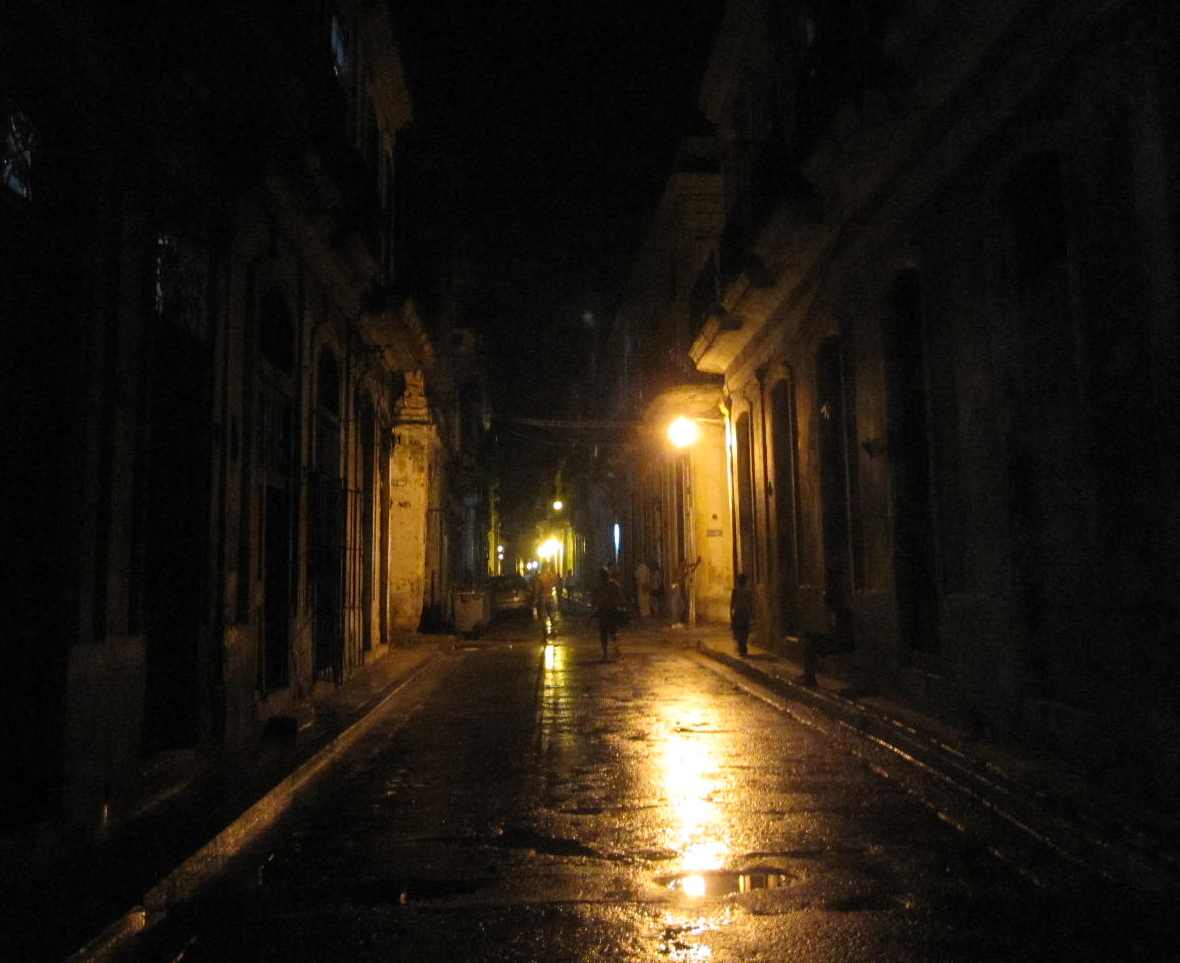
    A Naples night under dramatic skies

    Later that night, I walked back to the hostel through the same streets contemplating the brevity of life, the aspiration for beauty and how travel can connect them for a more meaningful existence. I wondered if there was anything in the world i wanted to be more than a traveler – or a gypsy, or a nomad to use the lesser sophisticated terms. Tomorrow would be a new day. I had plans for Pompeii and Vesuvius before departing for Geneva. I knew that Naples’ cobblestoned streets, sinister graffiti, sunset over the Tyrrhenian sea and the contemplative walk back to the hostel will remain etched on my mind for a long time to come. For the first time in my life, I was nostalgic for a place I had not even left yet. I knew I was coming back here soon!

    A contemplative walk back home through Napoli night
  • Your serpentine curls

    When fresh from the shower

    your black serpentine curls

    fall down to your waist

    like hot Icelandic springs

    And your fragrance spreads

    like Mongols on fire

    When your chapped winter lips

    quiver with sadness

    and you rush to the kitchen

    to hide your tears

    When your shores

    are gently washed

    with waves upon waves

    of musical laughter

    When you speak Urdu

    with an intonation so lovely

    and infinitely Punjabi

    I could listen, captivated,

    for eternities on end

    When you’re strong and ripping apart

    When you’re vulnerable and falling apart

    I fall in love with you

    quietly; like you and I,

    our love cannot be much different

    from us.

  • Mevlana

    I’ve an unresolved affinity for Maulana Rumi (Mevlana in Turkish) – an intuition that he might be the only saviour I will ever have. I taught myself basic Persian 3 years ago only to read his Masnavi and I still haven’t read it.

    What if he doesn’t live up to my expectations of him? What if I fail to live up to his?

    Konya is home to Rumi therefore, it was hard to come to Istanbul and forget Konya. Though I couldn’t visit it during my first layover in Istanbul while traveling to Italy, I made sure I see it on my way back. If you’re traveling to Europe from Pakistan and are interested in visiting Mevlana, Turkish Airlines will be your cheapest bet. After landing in Istanbul, you’ll have to take domestic flights for Konya and back because it is not an international airport.

    20190628_193100.jpg
    Landing in Konya on an overcast day. Taurus mountains can be seen in a distance.

    Besides being a small public airport, Konya is also a military base so I could spot Turkish Air Force’s C-130s on the tarmac while my plane taxied to the terminal. I had already booked a motel room near Mevlana Türbesi (Rumi’s tomb) earlier while departing from Milan. Soon after I had landed in Konya, i realized my European sim wasn’t exactly functional here and the natives wouldn’t understand English. I could very well see a disaster unfold – how on earth was I going to navigate my way to my motel and then to Mevlana’s tomb if not with the internet or a local guide understanding my language? Thanks to Mevlana though; he became my guide, my host. All I had to say to the passport control at Istanbul airport, the bus driver, the pedestrians, the random strangers, the beggars and the prostitutes of Konya, was the word “Mevlana”. It seemed to be a word from some universal language. A word powerful enough to warm up a stranger to another, a host to a guest, a guide to a lost traveler. Not long after, I was in my motel with Mevlana just 400 meters east.

    I spent that night in conflicting emotions. It was not exactly spiritual, to say the least. The room next to mine was occupied by a couple who started to let off their steam right after I unlocked the door to my room. I flipped open the Masnavi in my phone to distract myself and tried to read it over the loud thrusting and moaning but eventually had to give in, put my phone aside and wait for them to finish.

    Next morning, I set off early before sunrise. Remember I had no internet so I navigated my way in the morning twilight like ancient wayfarers and caravan guides with the rising pinkish hues on the horizon being my sole sense of direction for east. I went about my usual way, preferring narrow streets over wide roads every time I had a choice. This might have taken me long but led to some hidden treasures too.

    IMG_20191025_090147_000
    Nar-i-Ask – a small streetside art gallery I came upon. Nar-i-Ask is a Persian word, written here in Latin and Arabic script, meaning “The fire of love”

    Eventually one of the streets left me at a wide traffic-less intersection and a huge structure stood in the middle of it. I knew I had reached somewhere important. My heart skipped a beat – it could be Mevlana Türbesi.

    20190629_062711.jpg
    The western front of Cami Selimiye – a minaret of Rumi’s tomb can be seen at it’s back (to the right)

    I soon realized it was not. I walked past the intersection and around the building to reach the courtyard in its front. The wall inscription beside the door read “Cami Selimiye”. The architecture was similar to the mosques of Istanbul and the tiled space stretching in front of it seemed more like a public square due to its vastness.

    IMG_20191020_174651_345

    I was confused. Though magnificent it was in its own right, i was too close to the Rumi’s tomb to be happy for finding Cami Selimiye. Mevlana was nowhere to be seen. Or so I thought. Upon my inquiry, the street selling woman sitting on the stairs outside the Cami, told me what I saw to my left was in fact my destination. I zoomed out and yes, there it was. I had probably mistaken it to be an extension of Cami in spite of its very distinct architecture.

    IMG_20191025_075958_175

    It was a moment of epiphany, regret, happiness, sadness – quite a turmoil of emotions. I wanted a close up of Mevalana’s final resting place.

    20190629_063809.jpgMy return flight was 1000 hrs and the tomb was to open for visitors at 0900 hrs so this is the closest I got to Mevlana. I could see a series of small minarets of Mevlana’s tomb from the courtyard and wondered what life would be like for dervishes in the cells underneath them.

    Perhaps I was too impure to be let inside. Mevlana might have wanted me to read his Masnavi first before visiting him. So be it. I turn back.

    I’ll see you again, Mevlana.

    I took some steps then turned instinctively, one final time, perhaps to etch the memory of this place forever in my mind.

    20190629_064117.jpg

  • Peace

    If it were up to me

    I would wish you peace

    of all the things in the world

    because it’s been too long

    that you’ve been fighting

    unknown battles on faraway fronts.

    I can see you

    wearing out

    breaking down

    as the hands of clock

    are running round;

    living the battles alone

    I had once hoped

    to fight by your side.

    As I lay now

    in my comfortable chaise longue

    and you wounded,

    perhaps mortally,

    in a distant battlefield,

    I try to write

    a string of words

    a prayer or a wish

    that might comfort you

    against the ugly dance

    of raging death.

    There are n number

    of beautiful words

    you could say

    to a parting friend

    but I know

    for you

    “peace” is not one

    “not till your last breath”,

    you had said.

    A warrior you lived

    and you hope to die

    nothing less.

    So I’d wish you instead

    all the pretty four lettered words

    starting from “luck”

    and taking the liberty

    to end

    with “love”.

  • Void

    When God created us, he left an aching void in us that could only be filled up by His love. Therefore, mankind embarked on a painstaking journey to find Him back and since nobody had actually seen God or knew what He looked like, the only tool they had to identify Him was the love-void inside of them: whatever filled that void up was to be the God!

    As long as His Beauty transcended the reach of their senses, they kept searching for it until they caught a reflection of it somewhere. Every time that happened, the caravan would halt there, closely inspect the thing that’s apparently exuding the Light of God, term it as mere illusion, discard it (or carry it as a relic) and move on. The ancient journey stretches to and continues up until our time.

    Our unconscious mind is a mysterious, intricate web of memories, lived and default. The Promise of Alast عہدِاَلَست is one such default memory that’s not actually lived by our bodies (although our souls were made witness to it in The World of Souls i.e. عالمِ اَرواح), is weak and hazy and lacks objective details like all other memories – but amazingly, it has a surprising capacity to override much stronger memories in order to storm our conscious mind to remind us that we have a Beloved to seek. The dormant yearning, thus catches fire. The torture it brings is familiar to us all.

    Our love-void is like a massive black hole consistently drawing us into anything that resembles God in the least. It could be anything from purity to strength to character to beauty because God alone is the origin of all likable attributes. Even if we encounter a single one of these traits, in the least of degrees, in somebody or something, we might feel immensely attracted to them because of our predisposition to fill up the void in ourselves, and start loving them. We can love them for as long as they stay true to our idea of God. Obviously, none but God fulfills this promise. So there come disappointments and the love eventually fades away with time as we start again to seek His Beauty until we find someone else. Only this time round, we make sure they last longer in the face of our godly ideal.

    People ask if the journey ends somewhere. No, it doesn’t. They’ll keep asking for more. At least, that’s the case with the perfect lover and the perfect Beloved: no one can love Allah more than Muhammad (S.A.W.) did, yet in His last days He used to say, “Forgive me, God, I couldn’t know Thee as I should have.” You see, he yearned for even more of His love.

    Don’t you hate your Nafs ever. It’s something that eventually gets you to your destination. What happens when you place an obstacle in a fast moving river. The water initially stops, gathers around the obstacle and its level begins to rise. The river gains greater strength near the obstacle until it either breaks it apart or sweeps it along. Same goes for Nafs. While attempting to resist our pursuit of Beauty by engaging us in distractions, it only manages to be an obstacle in the course of the free river of Love flowing inside of us. Every time that happens, our river stops for a while, we feel that we are missing something important though we might not know exactly what it is and we may even fall into depression. But ultimately we break away the obstacle and come out stronger and nearer to God in the journey of love. That’s how it goes. Had there been no obstacle, there would have been no progress either, see?

    Last and the most important question: How can you gain His love in this world? There’s a mystic saying about it: there are as many paths to God as there are human souls on earth. However, there are some baby steps that we can take. Read about the people who actually gained His love. Drop your guard for your inner sense of Beauty in order to let it guide you freely. But above and beyond everything else, read Allah. He, of all the beings, knows how do we get to Him and He has made no secret of the Path. The opening chapter of Quran, Surah Fatiha, consists solely of the supplication that addresses this fundamental need of ours: اھدنا الصراط المستقیم i.e. Guide us to the right Path and it seems like, as Dr. Israr says, the whole of Quran that follows, is a divine response to this supplication.

    So it’s definitely well worth a read. But what happens when you first open it? I’ll hopefully write on this later and I’m quite positive you’ll be able to relate!

    ________________________________________________________________________________________

    P.S. This was originally written in response to a host of questions posed by an old fellow who grew up mainly in a liberal atmosphere but felt a growing void and a yearning for the divine inside of her. I just wanted to connect the two using Iqbal, Dr. Israr and Dr. Rafiuddin. Another thing that i had in my mind while writing this, was a casual discussion with a fellow blogger. Please feel free to comment, add, discuss or correct!

  • Mother God

    Though God is an ethereal spirit with no sexual connotations to its gender, the debate over His “actual” gender has passionately raged in the recent decades particularly in the wake of the rise of radical feminism in reaction to the timeless patriarchy that had reigned supreme. The reason i am writing this is that this debate is not distant, irrelevant or academic, it rather dictates how we perceive God in our day to day lives, defines our faith and how we act under its influence.

    The most prevailing understanding of the gender of God is that God is predominantly a powerful masculine figure. This understanding possibly originated and strengthened over centuries in attempts to explain the attributes of God being Strong (Qawi), Subduer (Qahhar), Avenger (Muntaqim) and Compeller (Jabbar). Though there are other equally important attributes like Jamal (Beauty) that are the prototype of femininity but since these scholarly attempts were made in patriarchal societies so it is not very surprising for male-chauvinistic interpretations to have made their way into the sacred religious texts passed on to later generations. This partially explains why today, we refer to, and more importantly understand, God as a watchful man-guard over the universe though theological descriptions leave sufficient room for alternative explanations.

    The question remains: Is God REALLY a watchful man-guard or is He more of a compassionate mother – the love of whom envelops the universe?

    Islam has a distinctive edge over other religions of the world in that its Holy Book i.e. Quran has survived literally intact for centuries under conflicting and sometimes, even battling Muslim governments after the Prophet Muhammad (S.A.W.). Karen Armstrong brings to our notice a commonly recited but strikingly overlooked piece from Quran i.e. the very Bism-illah-irrahman-irrahim.

    …Nor was God distinctively male. Each recitation began with the invocation: “In the name of Allah, the Compassionate (al-Rahman) and the Merciful (al-Rahim). Allah was a masculine noun, but the divine names al-Rahman and al-Rahim are not only grammatically feminine but related etymologically to the word for womb(!)

    It must be a shocking revelation for anybody who recites Quran on a regular basis. In the very tasmiah, God uses one masculine and two feminine names for Him(?)self, which although does not prove that God is predominantly feminine, in the very least points to the fact that God doesn’t want this side of Him(?) to be taken any lightly.

    I was scrolling down a forum when i found this gem posted by MariaS.

    Some people may say when huwa means “he” and “it” and hiya means “she” and “it” then why is God using huwa if hiya and huwa both mean “it” as Allah says : Qul huwAllahu ahad [Say he is One and Alone]? Answer: In A’rabic grammar, there are certain rules and criteria for feminine gender: 1) If it is feminine in nature like ummun [mother], ukhtun [sister]. 2) If the word ends with an A’rabic word ‘ta‘ like mirwaahatun [fan]. 3) If the word ends ‘badha Alif‘- an A’rabic letter. 4) Pairs of the body like yadun [hands], a’inun [eyes]. As the above criteria are not getting satisfied, by default Allah uses huwa-it.

    I am not concluding this piece because i understand that people have different opinions. I do not intend to “establish” anything here neither do i feel the need of doing it nor do i find myself qualified for that. It’s just that i am going through a spiritual crisis where invoking God is, as i see it, the only way out and invoking a mother God feels much easier and more natural. Besides, I feel it’s really important for us to see God in the universe. The watchful man-guard is hard to see, the compassionate mother is hard not to.

    _______________________________________________________________________

    P.S. In case this article interests you, there are some links that i would like you to check out.

    Islam and the Divine Feminine

    God’s Feminine Side Is Plain to See (slightly offensive but makes the point anyway)

    Shekhina: The Feminine Aspect of God

    Also, in case you are into literature, Paulo Coelho, in his book “By the River Piedra, I Sat Down and Wept”, makes an overwhelmingly beautiful case for the feminine God.

  • Mysticism and Contemporary Mainstream Islam

    One of the prominent teachings of Islamic mysticism is that everyone is entitled to their own personal quest for God. An enticing implication of this idea is that one has infinite freedom in making choice of The Path, and nonconformity is not just welcome but highly looked upon, which perhaps is why Islamic mysticism caught on right from its early years. Delivering a serious blow to the contemporary monolithic understanding of religion of the time, it made greater space for spirituality which had almost died when religion began to be commonly equated with the do’s and don’ts of Shari’ah.

    The general acceptance of un-orthodoxy slowly altered the way people understood vice and virtue. Being socially deviant did no longer equate with being a sinner. With that came a greater appreciation for all the ways in which people pursued their Creator and lesser scrutiny of how they dressed, behaved and looked. Uniformity was no longer called for. The complex cultural milieu that took birth was rather celebrated. In fact the whole enterprise of judging people from their Zahir (outlook) came crashing down.
    Logically so, the Eeman acquired the status of a variable that could not be, or rather, needed not be, physically measured in inches (i.e. how high one’s pants from one’s ankles were, how long one’s beard was etc.) and returned to its original definition of piety.

    However, today, more than we want to acknowledge, binary logic runs in the veins of contemporary Dar-ul-Uloom thought, which is sadly the sole representative of religion, rivaled by none. Since the beginning of time, binary logic is known to have made distinctions and bifurcations between different schools of thought instead of bringing about a unification which is the obvious need of time. The result is a highly confused and debated upon system of mainstream Islam. If ever humanity could take a break from that, it was in the period of mystics who made fundamental reformation in the way people saw the religion and taught them its real essence i.e. love, which threads the universe, connecting and molding every fragmented reality into The One.

    Rumi makes exactly the same point when he states in his Masnawi Al Maanawi with an authority only he is entitled to:

    I have lifted the marrow from the Quran and have left the empty bones for the dogs to quarrel upon.

    By bones, he meant endless, trivial debates on Ilm-ul-Kalam that scholars of the time engaged in, leaving out the matters of consequence that demanded greater and immediate attention i.e. spiritual well-being, referred to as “marrow” here. More or less the same thing was said by Jesus as quoted in Matthew [23:23,24].

    You strain out a gnat but swallow a camel.

    P.S.: I’d like to expand on this post. Ideas, questions and critiques are welcome.

  • Tempest

    Tempest

    You,
    a raging storm,
    in ocean deep.
    I,
    a fisherman,
    far from the shore.

  • Backstreet

    Backstreet

    Treading the backstreets,

    On the hopscotch-chalked sidewalks,

    And in the strings of strange Trennbare verbs

    Of a stranger language,

    I have often secretly tried

    To trace your immaculate form,

    Connecting the invisible dots

    That lay all around,

    Scattered,

    Like silver mercury on earth.

  • I am a Fikri now!

    Now when Ramadhan has taken a back seat to just about everything else and the old, disenchanted life slowly settles upon the days, shackling people into blitzy routines so they can once again get back to being the same, ever-complaining slaves to time and world, i look back in retrospect to find what impact the blessed days have made on my life.

    Daura Tarjumah Quran wasn’t something new to me but this Ramadhan’s was a no match. I was staying back in university for summer semester when i heard about Abbasi shb’s daura. Lemme tell you here that i’m the type of guy who rarely expects good out of things. Call it pessismism but that really helps; at least you’re never let down. But when i learnt the man was known to have been conducting the same program for the last NINETEEN years, i couldn’t help anticipating the wildest (if that’s the right word to say) things there. The daura was expected to draw in fikris from all corners of Pindi/Islamabad. As i was contemplating the distance (19km on the busiest roads of Islamabad) vs worth issues, i was appointed Naqeeb over the rest to ensure their timely arrivals. So, it wasn’t a choice anymore. Soon I found myself scrambling to find a balance between being utterly indifferent, overly demanding and any possible combination of the two towards my Ma’mooreen. You can either be strict and get things done or be good, sit back and get nowhere. That’s a precarious balance. I am no rope-walker but i must say, i did try to walk that fine line. It might not have made me a good Ameer but i’m sure it did turn me into a better Ma’moor.

    Anyway, the nights were more enthralling than i could imagine. Abbasi shb, like always, was amazing. The first time i saw him in those round-lensed spectacles and that off-white hat, i remember thinking, “Jeez, he looks a lot older!” But when i sat down i found he sounded a lot wiser as well. Or maybe that was the first time his wisdom was actually trickling down into my chicken-sized brain unlike his usual fikri lectures which make me feel like knocking my head and asking if  that’s really home to some wrinkly, redneck Mr. Brain. After all, fikr was never my strongest point. So i was saying, when he addresses the general public, he is very kind, polite and easier to understand. I found him opening things up, instead of bringing them to a close with a usual satirical remark which would later turn into a shared joke among his keen disciples who liked to talk about world politics, social injustice, secret cults and political Islam.

    Realizing that it was a one-off for me, I vowed not to sleep even if that means having to dream with open eyes, drinking gallons of water and taking consequent leaks and avoiding catch-up gossips under the cool night sky. The month-long ordeal paid off AlhumdulIllah. You see, I am a fikri now!