Tag: Travel

  • Voyeurism

    Voyeurism

    Much of my knowledge about the world is derived from peeking through windows. They are made of glass and plywood, flesh and bone, brick and mortar, cast iron and air, and exist just about everywhere I have been, opening portals into other dimensions. It feels voyeuristic to look at something so intimate – someone so vulnerable – without knowing anything about them. It becomes a secret you would carry as you move swiftly from one window to the next, collecting more. The joy of seeing what you are not supposed to keeps you lightheaded, almost dizzy – until those secrets weigh you down and transform you into someone else. It’s exactly that someone else who is writing this blog.
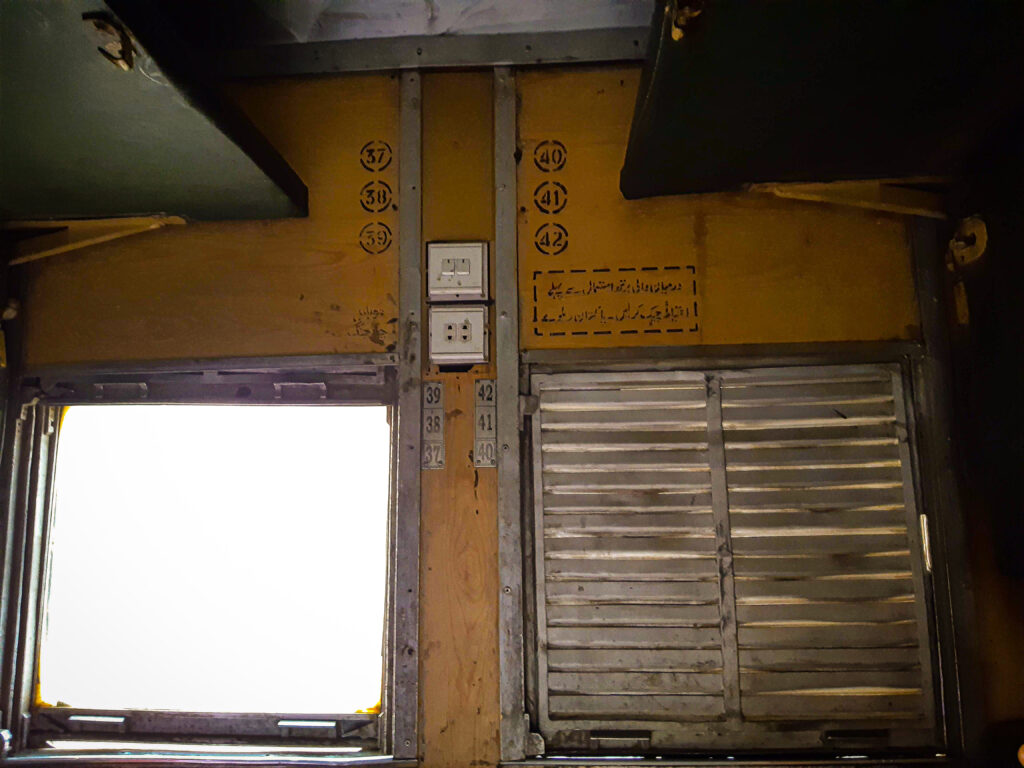
    A pair of economy class cabin windows of Khyber Mail train in Pakistan

    Imagine, for a while, you are a Peeping Tom like me – curious about every window you come across, wondering why it’s there, gripped by a quiet, almost painful curiosity about what might be happening behind it. These are not the kind of windows that draw their curtains or swing shut when they sense someone lurking. These are windows that want be looked into – offering a tantalizing view of exhibitionists of circumstance, constantly exposing themselves, curled in strange positions in remarkable places. Windows most people are too busy to notice, revealing lives that are quietly unfolding while the rest of us rush to get somewhere else.
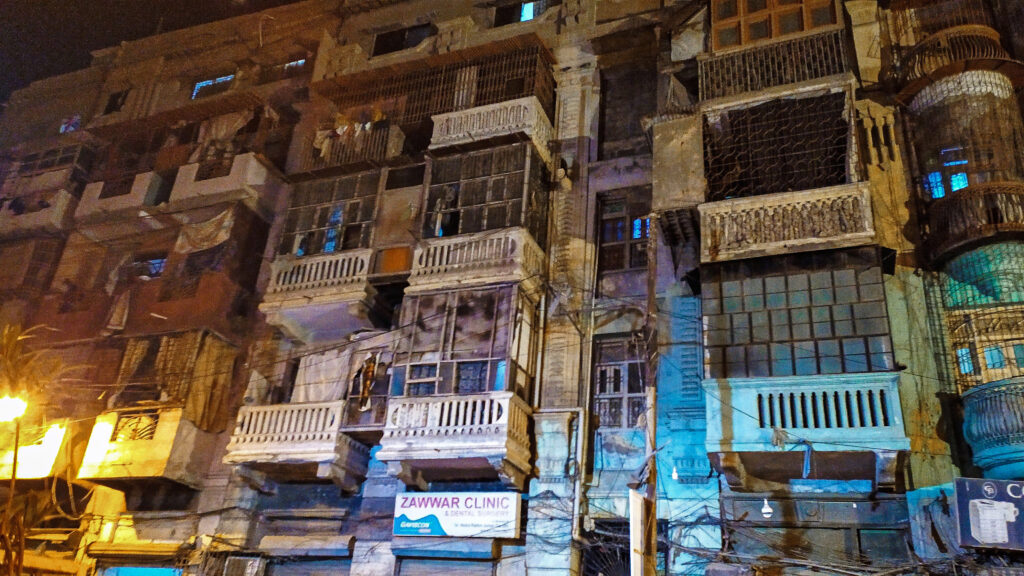
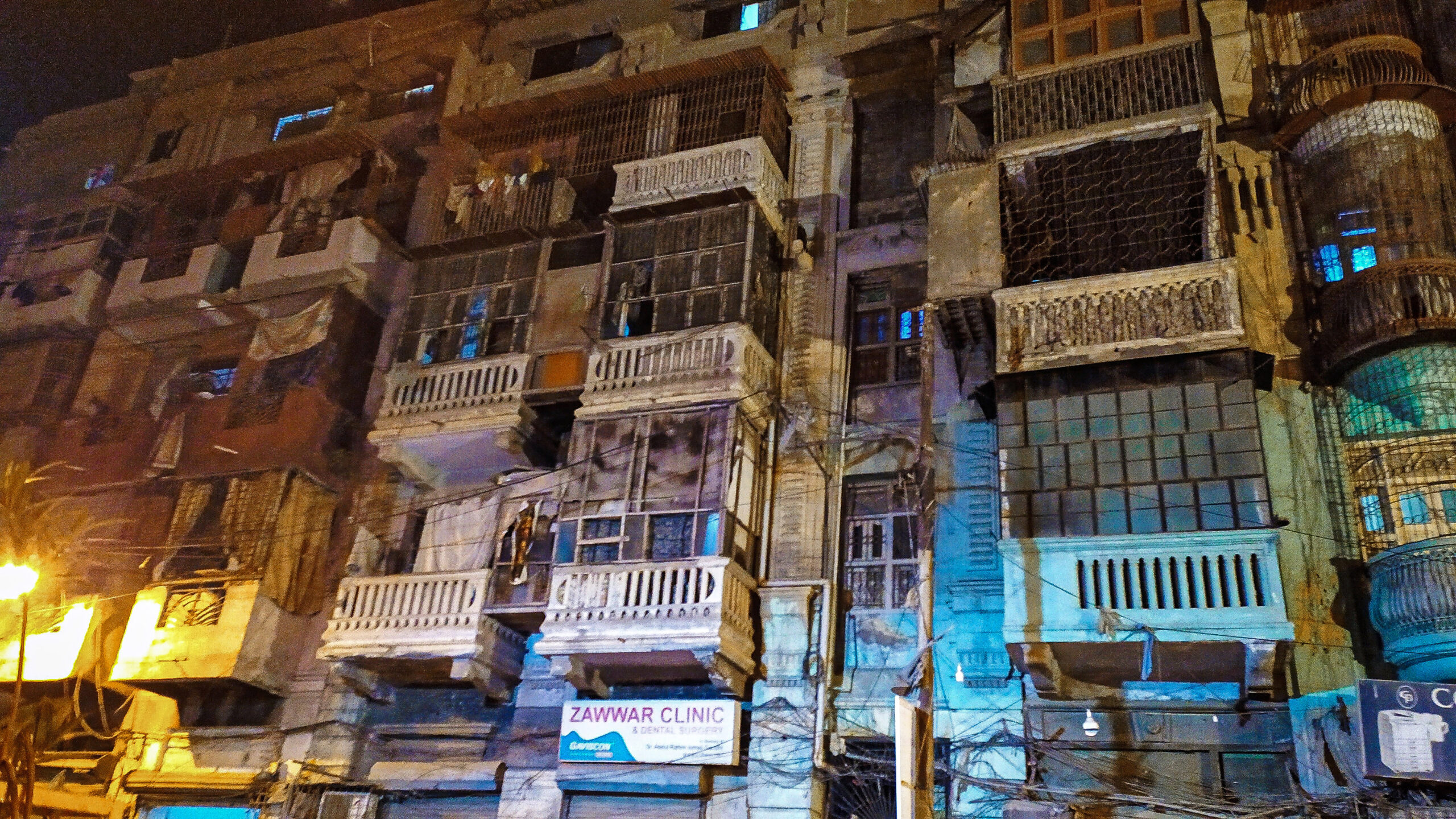
    An abundance of windows in Saddar, Karachi

    It’s not so much the window as the world it leads to. Think of it as an exotic strip club that’s only for the soul. It inspires a kind of awe: the same unsettled fascination I once felt while scrolling through Wikipedia’s page on voyeurism, where a photograph captures a young woman exposing herself in a public square in Budapest. ‘Appropriately dressed’ middle-aged women pass her by, their faces caught somewhere between disapproval and reluctant curiosity – perhaps because they notice their husbands looking.

    It is an uncomfortable image. Not because of what is exposed, but because of what it reveals: that vulnerability and beauty do not have to be opposites – and that, we are all, in some quiet way, looking, even if too disapprovingly to truly see.

    It requires a shift in temperament – a kind of practiced defiance – to hold your ground when these windows appear out of nowhere, when every instinct urges you to retreat. I have been there long enough not to look away when they open.

    Here is the homeless man with curled, overgrown nails, covered in a blanket of flies, sleeping like an embryo on a vendor stand – as if it were the only womb he ever knew – on a sprawling square outside Rahim Yar Khan railway station. I knew instantly: that was my window, and I had to stop and watch.
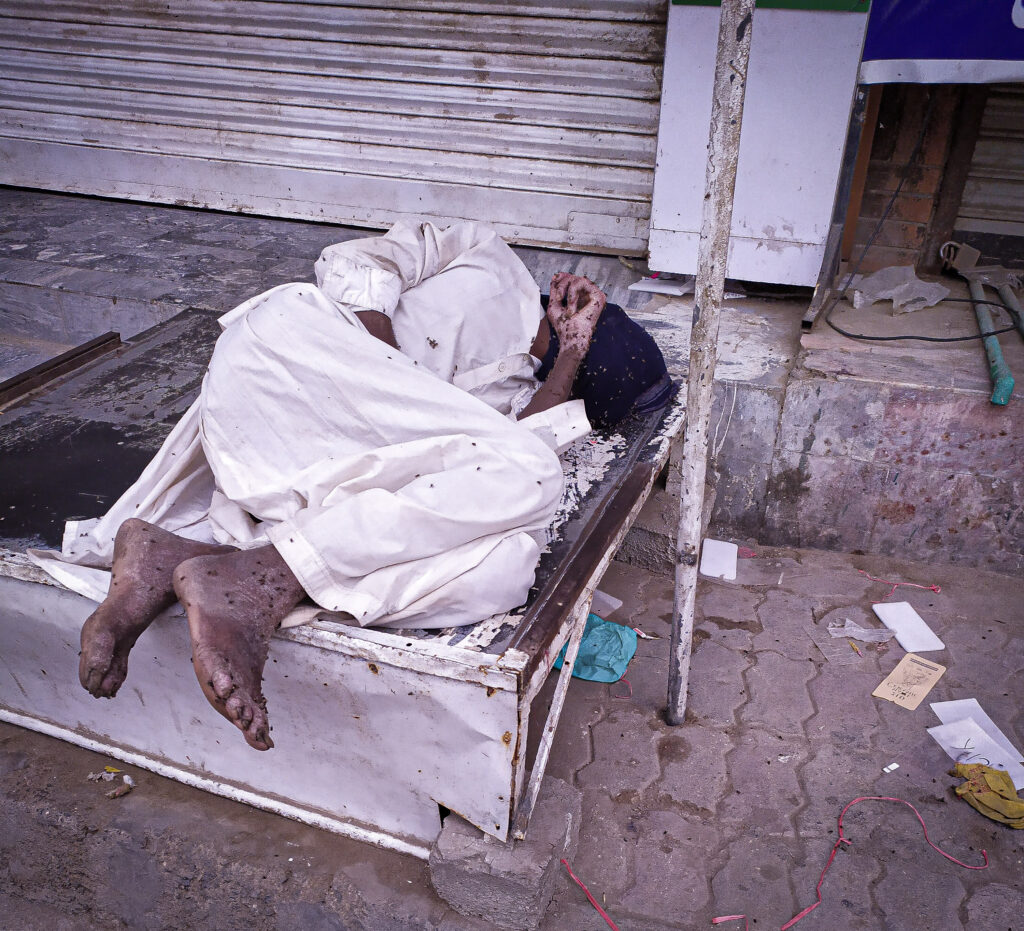
    Unsurprisingly, people went to great trouble pretending he did not exist – as if he were a glitch, an aberration, an ugly patch best ignored. They changed their path or turned away while passing, their comfort unperturbed. When I took out my camera, they were almost offended – as if I had broken the fragile web of pretence they had so carefully woven.

    Life as a spectator is not as hollow as motivational speakers make it out to be. “Take the wheel”, they say, fists in the air – but they fail to tell you at what cost. Being at the wheel, at times, means focusing so hard on the road that you miss the wild grass along the shoulder, dancing in the afternoon wind. They may go so far as to tell you it’s futile to water it but some would do it anyway.

    Those seen watering the wild grass were thought to be insane by those who couldn’t see it dance.
  • Surreal

    Partly because the sleeping beauty resting in the snowcapped mountains looked stunning in her new white wardrobe, partly because the low hanging clouds huddled together to look like a giant fluff of cotton candy from the cockpit, partly because the piercing though strangely welcome cold was vaguely reminiscent of all the places I could have been and partly because the dome-shaped Gol Canteen’s hearty breakfast of anda channa and creamy tea with rainbow-colored froth warmed me up to the cold outside, I descended into a reflective, almost meditative mood after landing in Quetta and felt the urge to write. Sitting in the heated room with a vase-shaped lamp lit up dimly in a corner and an expansive window overlooking the dark, overcast day and a giant mountain just standing grimly and letting gray clouds float above it, I feel a mix of many emotions which, were they to be defined in a word, could be summed up in nothing short of ‘gratitude’.

    Strange how an encounter with Beauty makes one want to worship or at least, be grateful to some higher entity that afforded that encounter. It’s almost an involuntary reaction, as swift and natural as scrambling for balance when falling or crossing your arms when cold. I know the excitement is going to wane in my weeks of staying here, the welcoming cold would start to bite, the snow-capped mountains would become drab, and the sleeping beauty and her outfit would no longer look stunning, if I still trace her figure in the mountains at all.

    In fleeting moments like these, when there is no rush to get anywhere, the cognition of the surrounding beauty is overpowering, my mind is not drifting elsewhere and I don’t desire anyone or anything that’s not right before me, that I truly feel in the moment right where I actually am. I hope as the years go by, this blog entry reminds me of my early enchantment with the wintery Quetta and helps to preserve it for a little longer.

  • The Lake

    The Lake

    My mother-in-law had been pining for a trip to the lake since the day she had arrived so we finally decided to drive her up there and spend a night by the lakeside this weekend. It had been a while since I and Fatima had visited the lake anyway so I pushed my workout up from the usual afternoon to early morning and planned to set off after the Friday prayers.

    I like to keep my travel prep simple. The ritual involves going over three things: book, clothes and dress. The perk of traveling with my wife (apart from her cherishable company, of course) is that she takes care of everything else so I only have to worry about the first – a book that would go with the clear lake and skies, in this case. My bookshelf here is in a bit of a crisis since I’ve been lending out more books lately than I’m buying so it was to be a challenge to pick something uniquely suited to the occasion. But I soon realized I was mistaken when I noticed The Sheldon Book of Verse, an anthology of poems, tucked away in a dusty corner for God-knows-how-many years. I plucked out the paperback and took a moment to appreciate its handiness and vintage aesthetic appeal. Published in 1957, no wonder it was a relic from the past.

    As I drove down the M-9, the scenic Kirthar Mountains appeared on the driver’s side. It’s hard to ignore the distinctive mesas (i.e. flat-topped hills) standing solemnly in the barren wilderness. While I saw their distant figures behind the haze of smog every day while commuting back from work, it was a totally different experience to see them up close by the roadside. Ancient vagabonds riveted in space but traveling through time, I thought. For some reason unknown to me, the sight of these mountains in particular, and nature in general, is immensely liberating and awe-inspiring to me, offering a sense of humility and freedom from all that’s trivial. I rolled down my car window to take in the fresh winter afternoon.

    Stock photo of Kirthar Mountains

    Soon the wind turbines were visible on the passenger side. Hashir would be excited to see them but he was already asleep in his grandfather’s lap. As I got off the motorway and headed towards Jhampir, we realized we were snaking through the vast fields of wind turbines on both sides, their blades and towers now too imposing to take in a single glance. It took some five minutes of gentle patting on Hashir’s face to wake him up from the slumber he had drifted into during the past half hour, but the surprised smile that plastered itself on his dazed, still-sleepy face once he saw the giant structures made it worth the effort.

    The link road leading to Jhampir had several cattle farms belonging to Palari and Jakro tribes. A shrine (مزار شریف) would pop up every few kilometers reminding me of what M. A. Yusufi wrote about the shrines of sham saints in Sindh in his book, Aab-e-Gum:

    ان سے متعلق ہر چیز شریف ہے سواۓ صاحب مزار کے

    The road is surprisingly fine compared to what you expect a link road in interior Sindh to be like. But it gets deceptive further ahead as you find suspicious speed breakers in the middle of nowhere that can cause serious damage to your car if you aren’t vigilant. The link road culminates at a bridge over the railway crossing at Jhampir station. We were even able to show Hashir his first train up close while stopping by the same bridge on our way back.

    From there on, it’s a narrow 6 km road to the motel. The road is lined on both sides by acacia and sometimes, date-palm trees particularly as you head closer to the lake. Parchoon shops set up in tiny cabins and manned by stout, thick-mustached Sindhis donning traditional Sindhi caps make for an interesting sight. The peculiar, familiar scent associated with the sea for a Karachiite becomes noticeable much before the lake is even visible. Soon we are driving through the non-descript motel gate. The sun is still well above the horizon. We have managed to reach in time.

    The sun sets opposite the lake which means you can’t photograph the majestic lake sunsets you might have thought to capture on your way here. This can be a bit disappointing until you realize that it also means the sun would rise right above the lake the next morning. After a cup of tea and dinner, and a lot of sky- and lake-watching and mosquito-fighting in between, I snuggled up in bed with my book hoping to wake up to catch the first ray of sun the next day.

    I woke up in the morning twilight an hour before sunrise and headed straight out into the cold in my T-shirt and pajamas, anxious not to miss a single moment of the miracle that is a false dawn. Soon the fishing boats start to appear in distance; fishermen starting their day, rowing and setting up nets. Despite the biting cold none of us was prepared for (except me since my wonderful wife had packed in a hoodie), we gathered on the lawn in anticipation of the sunrise.

    The sun came up slowly and majestically from under the lake. Picture and video credits go to my sister-in-law who is a shutterbug and maintains an impressively artistic social media presence. Everybody basked in the warm sun while I and Fatima made breakfast in the rickety motel kitchen. In just a couple hours, the sun was high up in the sky and the lake began to simmer sending us back to our rooms. With the monumental event of the day over and the temperatures rising steadily, there was little else to do at the motel except pack our bags and get going.

    While the narrative of the story ends, the reflections, too many to recount here, demand a sequel which I will be writing shortly. Until then, Ciao!

  • Longing for Kashmir

    Upper Neelum

    It was 8 Oct, yesterday. Exactly a year ago, we had left Islamabad for a fantastic trip to Kashmir. From my son to his great-grandparents, there were four generations of my family packed in a 14-seater brand-new Mitsubishi coaster that sailed effortlessly through the scenic mountains of the Northern Areas. The memories of that trip have recently been tantalizing me to plan another trip to the North. As a tribute to the Kashmir trip, my sister-in-law made a melodious montage and I translated my poem, Cooling Vesuvius, into Urdu. I wrote it while having a cup of tea with my wife in a ramshackle dhaba by a road in Muzaffarabad that snaked up to the tomb of St Chinasi.

    تمہارے ساتھ ایک کپ چائے
    مجھے فرینک او ہارا کی مشہور نظم یاد دلا رہی ہے
    ‘‘Having a Coke with You’’
    اکتوبر کی یہ خنک ڈھلتی شام
    دور نارنجی افق پر
    ہمالیہ کے عظیم پہاڑوں کے نقوش ثبت کر رہی ہے
    اور ہم
    تاریکی میں ڈوبتے حسین سائرس بادلوں
    اور ان پر دھیرے دھیرے طلوع ہونے والے  نۓ چاند
    اور شاندار شمالی ستارے کے  نیچے
    اپنی پیالیاں تھامے
    جھلملاتے مظفر آباد سے کوسوں اوپر
    مسحور کھڑے ہیں
    ہمارے چینی مٹی کے برتنوں سے اٹھنے والی بھاپ
    ہماری گرم سانسوں کے سرد دھوئیں میں ضم ہو کر
    خوبصورت خط و خال بنا رہی ہے
    جیسے دور کوئی ہوائی جہاز
    ایک کہنہ مشق مصور کی مانند
    آسمان میں سفید لکیریں کھینچ رہا ہو
    ہمارے ساتھ سے گزرتی، بل کھاتی یہ سڑک
    جو پیر  چناسی کے مزار تک جاتی ہے
    مجھے نیپلز میں واقع
    کوہ ویسوویئس کی چوٹی تک جاتی
    ایک ایسی ہی سڑک کی یاد دلاتی ہے
    وہی ویسوویئس
    جس کے آتش فشاں نے ہزاروں سال پہلے
    بدکردار پومپی کو دفن کر دیا تھا ۔
    شاید تم سوچتی ہو گی
    کہ ہمارا تعلق بھی
    اسی ویسوویئس کی طرح
    دھیرے دھیرے سرد پڑ رہا ہے
    جسے اب اس کے دامن میں واقع
    نیپلز کا پر آ شوب شہر بھی
    کوئی خطرہ نہیں گردانتا
    اگرچہ ماہرین ارضیات اب بھی ویسوویئس کو ‘فعال’ کہتے ہیں۔
    ایک فعال آتش فشاں کیا ہی اچھا ہے
    اگر اس سے کوئی ڈرتا نہیں ، تم سوچتی ہو گی ؟
    مگر میرا خیال ہے
    ویسوویئس بہرحال  ویسوویئس ہے۔
    ٹیررھنین سمندر کے ساکن پانیوں کے ساتھ
    نیپلز کے ساحل پر ایستادہ
    ایک منفرد، دیو مالائی پہاڑ
    جسے اپنی عظمت ثابت کرنے کے لیے
    راکھ اور شعلوں میں بھڑکنے کی ضرورت نہیں ۔
    یا ہو سکتا ہے تم ٹھیک سمجھتی ہو
    ہم شاید واقعی بدل چکے ہیں
    جوشیلے محبت کرنے والوں سے  اچھے دوستوں میں ۔
    اگر یہ سچ  بھی ہے تو اس میں کوئی مضاُقہ  نہیں
    مجھے واقعی یہ زیادہ پسند ہے۔
    کیا تمہیں نہیں ؟

  • Protected: On Eating out in Peshawar

    This content is password-protected. To view it, please enter the password below.

  • For the Love of Naples

    I am not a scholar of Italian culture but it does not take a college degree to observe that as one travels south from Milan to Florence to Rome to Naples, there is a palpable difference in the air. From the stench of urine outside Rome railway station to the aroma of freshly baked Pizza Margherita in a glass-front bakery on a cobblestoned Naples street, everything screams that the south is wild; maybe not in the “Wild West” sort of way but in a different, perhaps more exotic, way. I wish I had the time to travel farther south to Sicily to explore and contemplate this difference but I guess there is always next time.

    When I landed at Milan Malpensa (MXP) airport, I just had this vague idea to travel maximum Italy in minimum time and at all costs (which basically meant to travel at no cost at all besides my limited TA/DA) but I did not have so much as drawn a roadmap thus far. I started gypsy style, seeking help from locals – the first of whom was my trainer himself, a very cool guy who had made lots of money while working for years in European Space Agency and spent it all on building his own tech startup related to reference positioning systems. On the second day of my training, he drove me in his Fiat to Verona – the historic Roman city sitting just 30 km from my B&B which I still could not have discovered by myself; and this is where it all took off very well from. I finished the two-week training in four days, checked out of the hotel room which was paid in full for my two week supposed stay, and set out on what I now reminisce to be a very risky adventure financially with just a backpack and a thin wad of government euros in my pocket.

    Right outside the Napoli railway terminal

    Fast forward to a week later, when I was in Naples with a reservation for Pizza Hostel (the cheapest I could find) in my hand and a flight booking to Geneva the next day, I was basically left with a little over 24 hours in the city. When you are short on time and money and friends and alien to the local language, you tend to realize and shrug off the massive weight of your third-world aristocracy and dive head-first into the stormy sea of fearsome unknowns that lay ahead. Navigating my way with Google Maps which often lost its own way in the narrow, deceptive streets, I had to resort to local help to reach my destination. Before long, I found myself in the finest neighborhood I could expect my 20-euros-a-day hostel to be located in.

    Pizza Hostel street view

    The genial Greco-Italian owner cum warden of Naples Pizza Hostel evoked the image of a retired Spartan warrior from his handsome face and curly black beard. He conducted himself like a long-time friend to all the eccentric travelers lying half-dressed in all imaginable positions on sofas scattered in the hostel lobby. With my socks and underwears hand-washed earlier the same day in Rome still hanging in a pompous display from my bag pack harnesses for drying, I seemed no foreigner among them. The warden spoke little English and was kind enough to lend me the same paddle-lock for nothing which i was offered for 15 euros few days back in a hostel in Venice. I needed to stretch my back which was hurting real bad from the past week’s train journeys. As i lay on the clean sheets, the very thought of sleep became so tempting that only a quiet recitation of Robert Frost’s Stopping by Woods on a Snowy Evening could thwart the drowsiness after a brief siesta.

    The woods are lovely, dark and deep.

    But i have promises to keep.

    And miles to go before I sleep.

    And miles to go before I sleep.”

    Naples bazaars reminiscing the sea

    As i came out into the Mediterranean June afternoon, Naples was bustling with activity. The smell of crowded bazaars reminiscing the Tyrrhenian sea to the west brought to me a sudden nostalgia for my own home i.e. Karachi. The dilapidated high rise apartments lined up the cobblestoned streets through which automobile drivers zipped by at the speed of light displaying an almost mystical disregard for life. Creepers, electricity and washing lines criss crossed each other in a beautiful mess. The heavy, obscure street wall graffiti had a sinister air to it. It was not difficult to imagine that I was wandering in an Italian crime scene – though, for sure, a particularly thrilling one.

    Criss crossing creepers, electricity and washing lines

    The obscure, sinister graffiti

    More obscure, sinister graffiti

    Even more graffiti

    As long as there are seas, I would find my way in foreign lands. And thus, I walked towards the Tyrrhenian through the most beautiful of the world’s streets.

    The love affair of cobble stones and green

    Could a street get any more inviting?

    An interesting door along the way

    Eventually, in the late afternoon, a street led into another street which led into an open boulevard offering me the first view to the sea.

    Tyrrhenian sea in the late afternoon sun with Mount Vesuvius in the background

    If all of us have a share of beauty to witness in one life then I already had mine for the day. Suddenly, I no longer cared for the ticking clock. A gypsy had decided to camp by the beach.

    Fishing boats line up the beach under a sun preparing to set

    Sunset over Naples – a manifestation of beauty

    A Naples night under dramatic skies

    Later that night, I walked back to the hostel through the same streets contemplating the brevity of life, the aspiration for beauty and how travel can connect them for a more meaningful existence. I wondered if there was anything in the world i wanted to be more than a traveler – or a gypsy, or a nomad to use the lesser sophisticated terms. Tomorrow would be a new day. I had plans for Pompeii and Vesuvius before departing for Geneva. I knew that Naples’ cobblestoned streets, sinister graffiti, sunset over the Tyrrhenian sea and the contemplative walk back to the hostel will remain etched on my mind for a long time to come. For the first time in my life, I was nostalgic for a place I had not even left yet. I knew I was coming back here soon!

    A contemplative walk back home through Napoli night

  • Mevlana

    I’ve an unresolved affinity for Maulana Rumi (Mevlana in Turkish) – an intuition that he might be the only saviour I will ever have. I taught myself basic Persian 3 years ago only to read his Masnavi and I still haven’t read it.

    What if he doesn’t live up to my expectations of him? What if I fail to live up to his?

    Konya is home to Rumi therefore, it was hard to come to Istanbul and forget Konya. Though I couldn’t visit it during my first layover in Istanbul while traveling to Italy, I made sure I see it on my way back. If you’re traveling to Europe from Pakistan and are interested in visiting Mevlana, Turkish Airlines will be your cheapest bet. After landing in Istanbul, you’ll have to take domestic flights for Konya and back because it is not an international airport.

    20190628_193100.jpg
    Landing in Konya on an overcast day. Taurus mountains can be seen in a distance.

    Besides being a small public airport, Konya is also a military base so I could spot Turkish Air Force’s C-130s on the tarmac while my plane taxied to the terminal. I had already booked a motel room near Mevlana Türbesi (Rumi’s tomb) earlier while departing from Milan. Soon after I had landed in Konya, i realized my European sim wasn’t exactly functional here and the natives wouldn’t understand English. I could very well see a disaster unfold – how on earth was I going to navigate my way to my motel and then to Mevlana’s tomb if not with the internet or a local guide understanding my language? Thanks to Mevlana though; he became my guide, my host. All I had to say to the passport control at Istanbul airport, the bus driver, the pedestrians, the random strangers, the beggars and the prostitutes of Konya, was the word “Mevlana”. It seemed to be a word from some universal language. A word powerful enough to warm up a stranger to another, a host to a guest, a guide to a lost traveler. Not long after, I was in my motel with Mevlana just 400 meters east.

    I spent that night in conflicting emotions. It was not exactly spiritual, to say the least. The room next to mine was occupied by a couple who started to let off their steam right after I unlocked the door to my room. I flipped open the Masnavi in my phone to distract myself and tried to read it over the loud thrusting and moaning but eventually had to give in, put my phone aside and wait for them to finish.

    Next morning, I set off early before sunrise. Remember I had no internet so I navigated my way in the morning twilight like ancient wayfarers and caravan guides with the rising pinkish hues on the horizon being my sole sense of direction for east. I went about my usual way, preferring narrow streets over wide roads every time I had a choice. This might have taken me long but led to some hidden treasures too.

    IMG_20191025_090147_000
    Nar-i-Ask – a small streetside art gallery I came upon. Nar-i-Ask is a Persian word, written here in Latin and Arabic script, meaning “The fire of love”

    Eventually one of the streets left me at a wide traffic-less intersection and a huge structure stood in the middle of it. I knew I had reached somewhere important. My heart skipped a beat – it could be Mevlana Türbesi.

    20190629_062711.jpg
    The western front of Cami Selimiye – a minaret of Rumi’s tomb can be seen at it’s back (to the right)

    I soon realized it was not. I walked past the intersection and around the building to reach the courtyard in its front. The wall inscription beside the door read “Cami Selimiye”. The architecture was similar to the mosques of Istanbul and the tiled space stretching in front of it seemed more like a public square due to its vastness.

    IMG_20191020_174651_345

    I was confused. Though magnificent it was in its own right, i was too close to the Rumi’s tomb to be happy for finding Cami Selimiye. Mevlana was nowhere to be seen. Or so I thought. Upon my inquiry, the street selling woman sitting on the stairs outside the Cami, told me what I saw to my left was in fact my destination. I zoomed out and yes, there it was. I had probably mistaken it to be an extension of Cami in spite of its very distinct architecture.

    IMG_20191025_075958_175

    It was a moment of epiphany, regret, happiness, sadness – quite a turmoil of emotions. I wanted a close up of Mevalana’s final resting place.

    20190629_063809.jpgMy return flight was 1000 hrs and the tomb was to open for visitors at 0900 hrs so this is the closest I got to Mevlana. I could see a series of small minarets of Mevlana’s tomb from the courtyard and wondered what life would be like for dervishes in the cells underneath them.

    Perhaps I was too impure to be let inside. Mevlana might have wanted me to read his Masnavi first before visiting him. So be it. I turn back.

    I’ll see you again, Mevlana.

    I took some steps then turned instinctively, one final time, perhaps to etch the memory of this place forever in my mind.

    20190629_064117.jpg