Author: Muhammad Sarosh

  • Exoticism

    Exoticism

    Let me just say this: there is no good or bad way to travel – just as there is no “exotic” or “mundane” experience in it. Sometimes I wonder if consumerism is the sorcerer that conjures up this endless stream of ridiculous adjectives for something as simple as travel – something that doesn’t need them – for ordinary people to whom it comes as naturally as food or sex, often even becoming a prerequisite for both.

    It’s not hard to see the sorcerer has an agenda. He is on the payroll of giant conglomerates that want you to believe you could live a fuller life – if only you could forget what you instinctively understand – if only you have a pocket deep enough – to consume more. So he creates an array of hypnotizing images of commercial districts in distant lands to manufacture desire and maximize spending.

    What’s unfortunate is that such images always – almost methodically – exclude the backstreets and alleyways, where the mundane is taking place.

    Would you really risk missing out on the “exotic”? the sorcerer asks. And without fully understanding the malignancy of the question – which, as framed, only invites a resounding “no” – we nod along and seek comfort in his hypnotic world.

    Are we too blind to notice the manipulation, the malignancy, the exploitation, the deception?

    Travel doesn’t lend itself to being neatly divided into “exotic” and “mundane.” This framing is intentionally employed by agents and beneficiaries of capitalism to subtly pressure people into chasing the exotic, as if failure to do so somehow diminishes the journey. Still, the division offers a useful entry point for my counterview.

    For me, travel is an extension of the mundane – a spectrum of unfiltered experiences stretching between the exotic and the not-so-exotic.
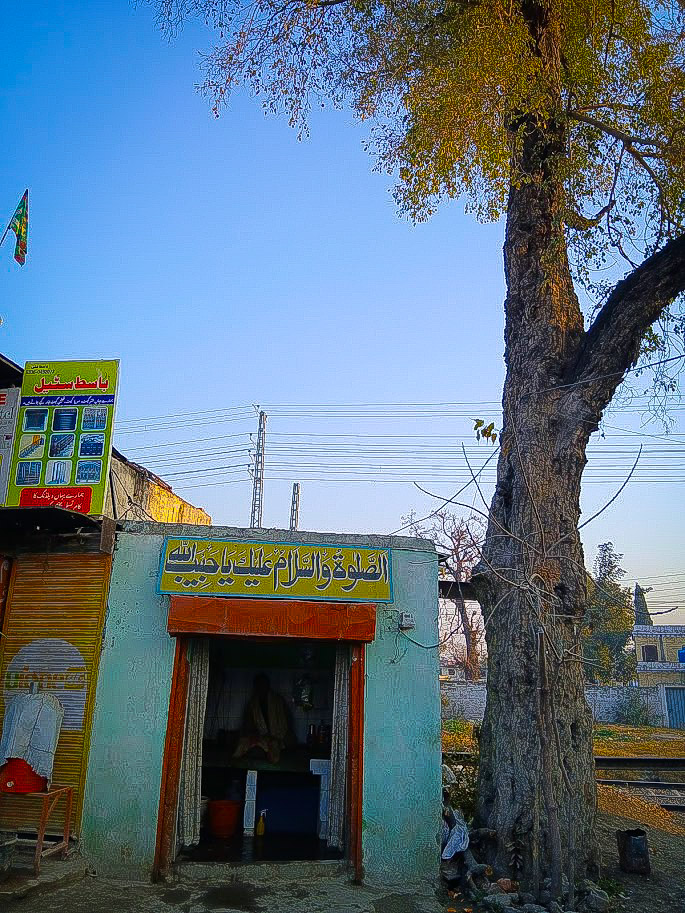
    A meat shop under a Neem tree

    The figures that populate this spectrum are not rare. They are everywhere. A bus ride brings you face to face with individuals carrying what feels like ancient, unspoken knowledge. Urban centers are filled with men quietly enduring chaos, homesick for their peaceful, distant villages. There are small-time teachers who sit across from you on a train whose influence echoes far beyond their modest circumstances, and tradesmen – like a butcher waiting under a Neem tree in a modest shop – for whom the day’s rhythm is dictated not by aspiration, but by arrival: of the distributor, the meat, the customers.
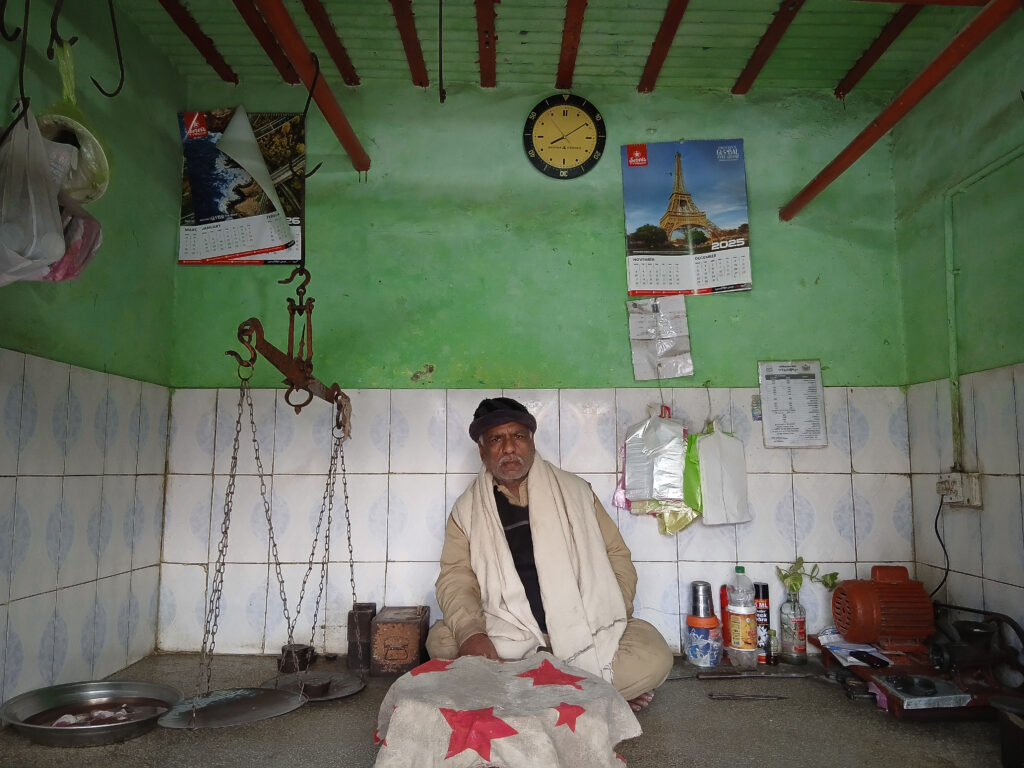
    The grand, mysterious butcher

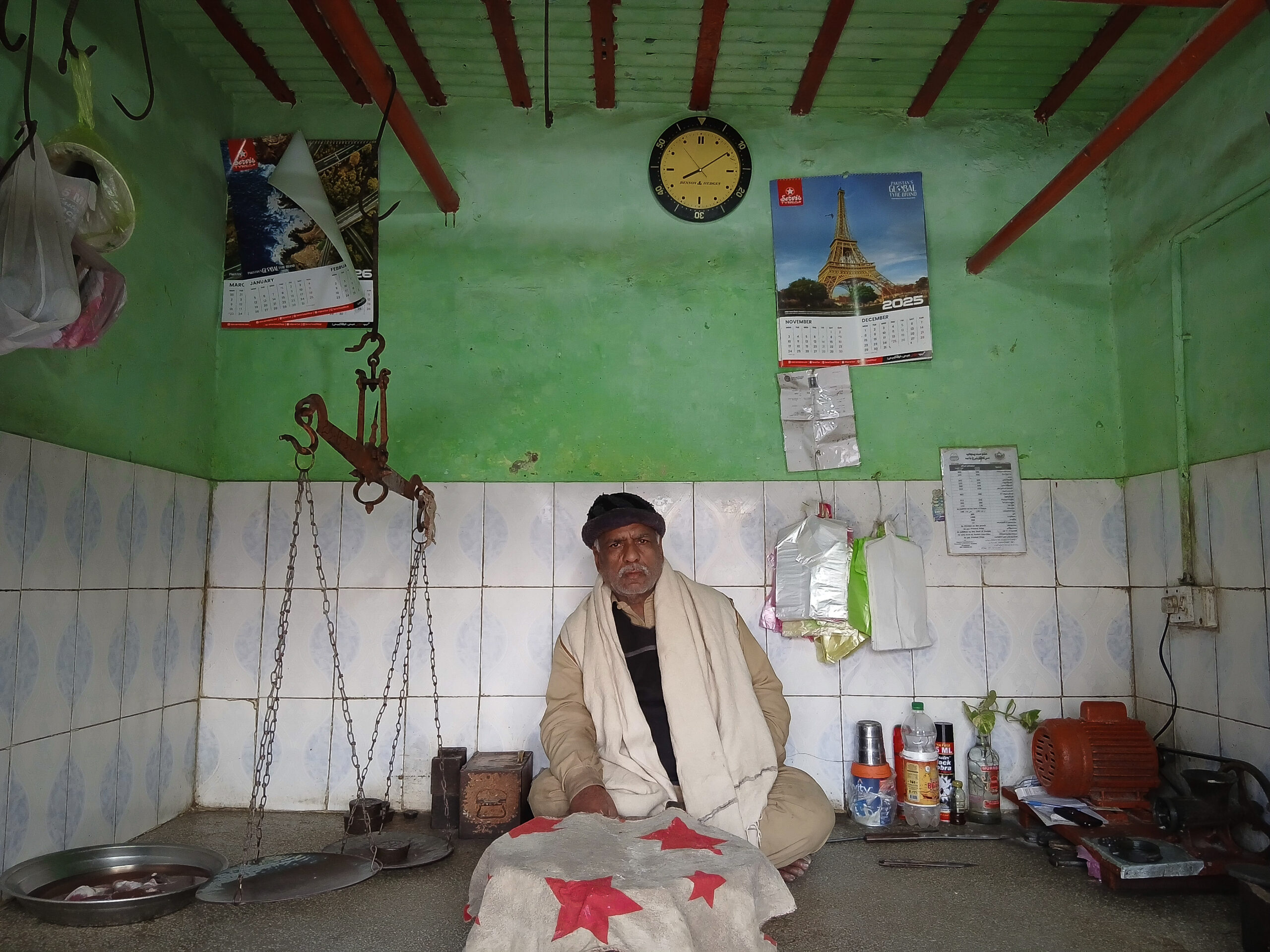
    What I mean is that this butcher under the Neem tree will never regard your itinerary – the need to reach somewhere and check items off your bucket list. He simply sits barefoot and cross-legged, an abundance of calendars hanging above and a rusty mechanical balance beside him, an air of mystery surrounding him, a woollen shawl draped over his stocky shoulders, in his tiny shop, splashed in delightful turquoise and rust colors in a small bazaar next to the railway lines in old Rawalpindi.

    He demands your attention right now, at this very moment.

    Soon, the soft morning light will shift; the distributor will arrive. The idle butcher will become a busy butcher, hiding himself – and his cheap calendars and delightful walls – behind a thick curtain of beef carcasses hanging from the front hooks. You will not catch him on your way back – if that is what you had in mind – because by then he will be lost in the cacophony and bustle of the bazaar.

    To assume he can be revisited later is a mistake. He cannot. And perhaps there is a quiet, inevitable penalty in this – not merely for being preoccupied with checklists and destinations, but for compulsively seeking the exotic while the very thing we are searching for sits, unacknowledged, in the guise of the mundane right under our nose.
  • Voyeurism

    Voyeurism

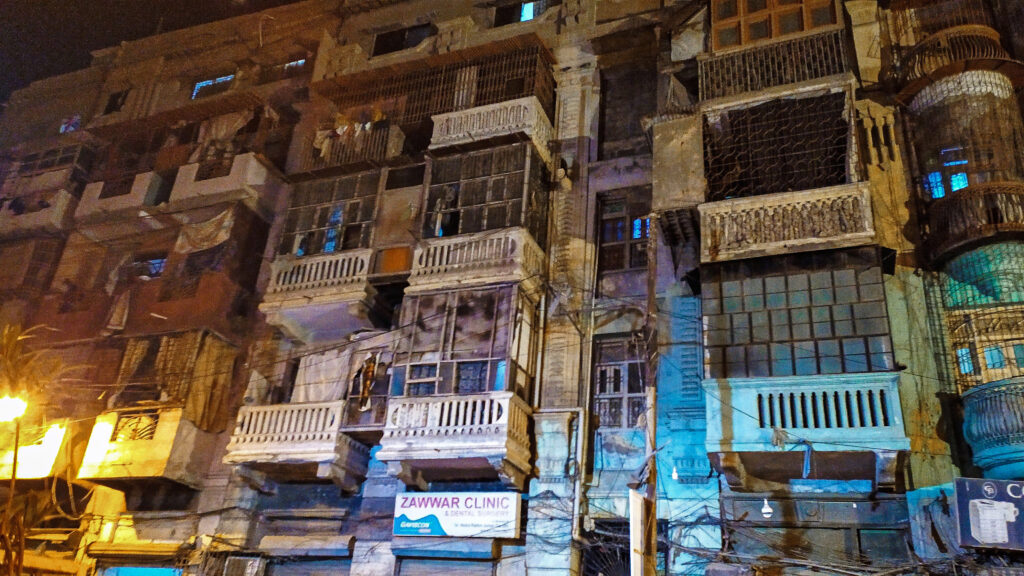
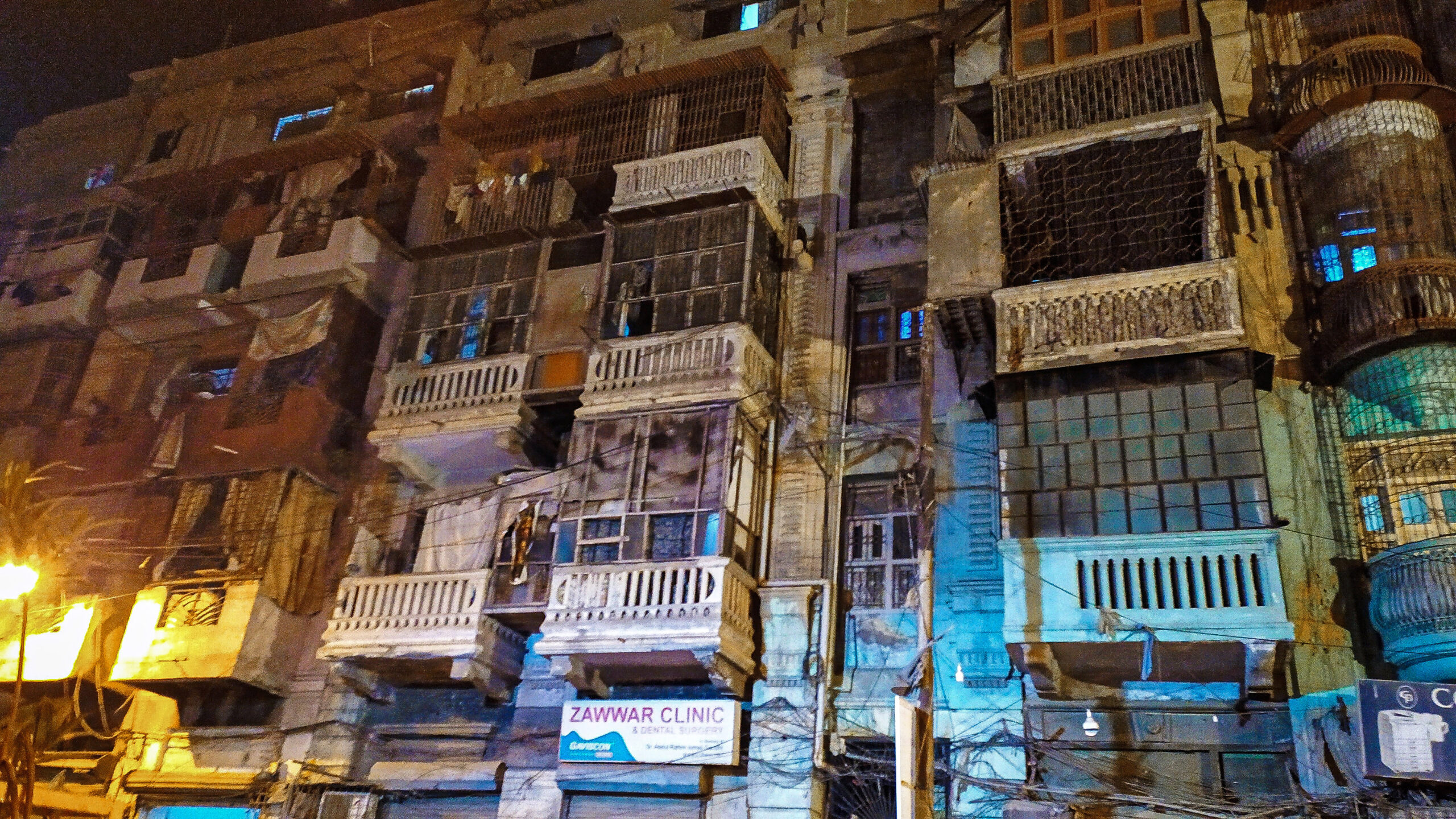
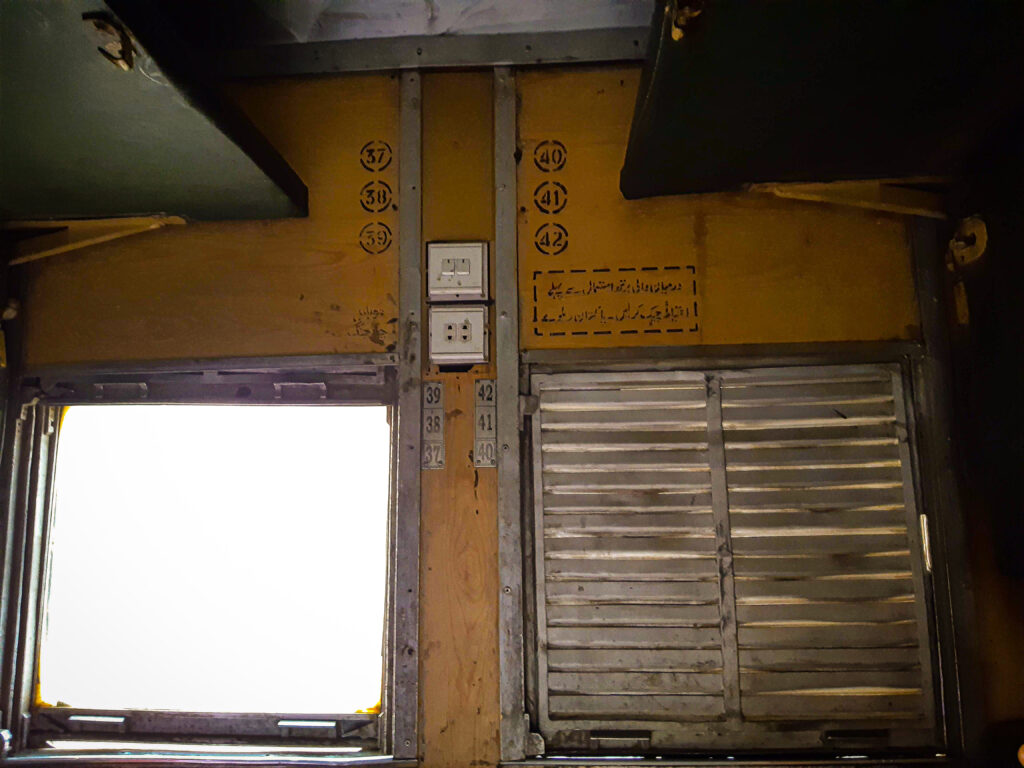
    Much of my knowledge about the world is derived from peeking through windows. They are made of glass and plywood, flesh and bone, brick and mortar, cast iron and air, and exist just about everywhere I have been, opening portals into other dimensions. It feels voyeuristic to look at something so intimate – someone so vulnerable – without knowing anything about them. It becomes a secret you would carry as you move swiftly from one window to the next, collecting more. The joy of seeing what you are not supposed to keeps you lightheaded, almost dizzy – until those secrets weigh you down and transform you into someone else. It’s exactly that someone else who is writing this blog.

    A pair of economy class cabin windows of Khyber Mail train in Pakistan

    Imagine, for a while, you are a Peeping Tom like me – curious about every window you come across, wondering why it’s there, gripped by a quiet, almost painful curiosity about what might be happening behind it. These are not the kind of windows that draw their curtains or swing shut when they sense someone lurking. These are windows that want be looked into – offering a tantalizing view of exhibitionists of circumstance, constantly exposing themselves, curled in strange positions in remarkable places. Windows most people are too busy to notice, revealing lives that are quietly unfolding while the rest of us rush to get somewhere else.

    An abundance of windows in Saddar, Karachi

    It’s not so much the window as the world it leads to. Think of it as an exotic strip club that’s only for the soul. It inspires a kind of awe: the same unsettled fascination I once felt while scrolling through Wikipedia’s page on voyeurism, where a photograph captures a young woman exposing herself in a public square in Budapest. ‘Appropriately dressed’ middle-aged women pass her by, their faces caught somewhere between disapproval and reluctant curiosity – perhaps because they notice their husbands looking.

    It is an uncomfortable image. Not because of what is exposed, but because of what it reveals: that vulnerability and beauty do not have to be opposites – and that, we are all, in some quiet way, looking, even if too disapprovingly to truly see.

    It requires a shift in temperament – a kind of practiced defiance – to hold your ground when these windows appear out of nowhere, when every instinct urges you to retreat. I have been there long enough not to look away when they open.

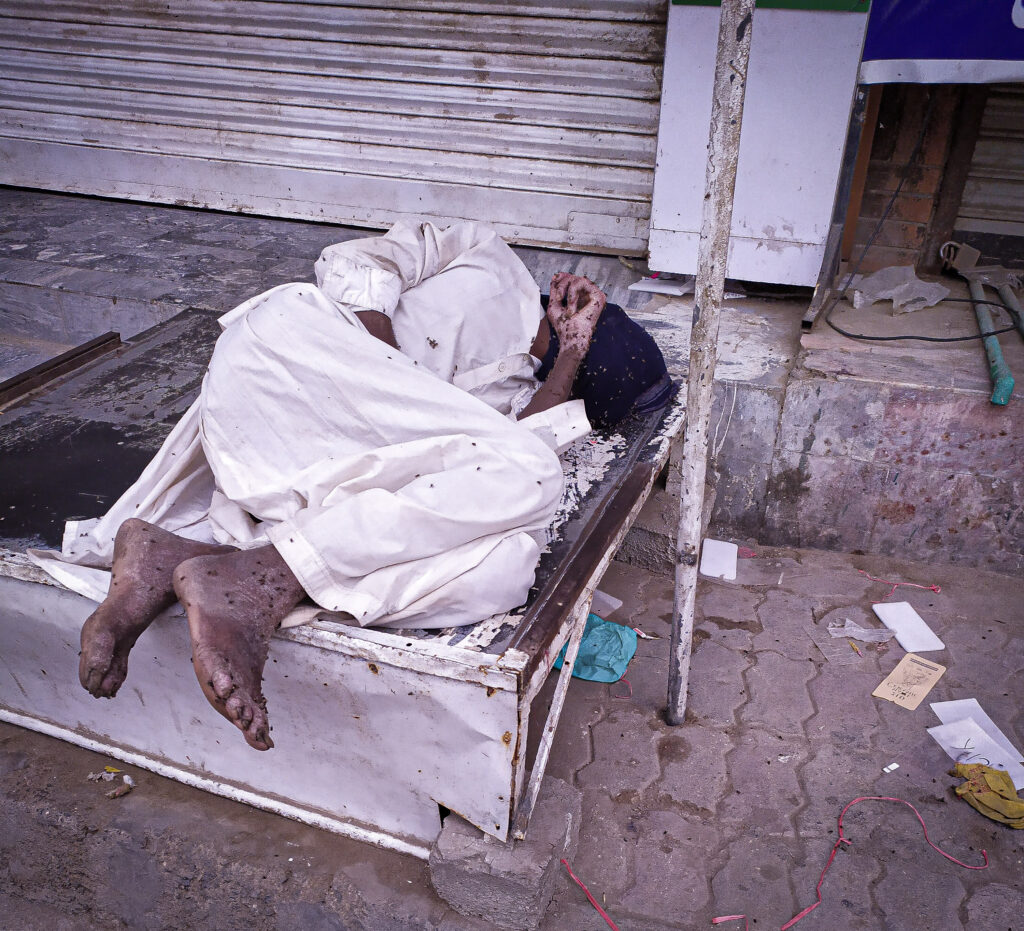
    Here is the homeless man with curled, overgrown nails, covered in a blanket of flies, sleeping like an embryo on a vendor stand – as if it were the only womb he ever knew – on a sprawling square outside Rahim Yar Khan railway station. I knew instantly: that was my window, and I had to stop and watch.

    Unsurprisingly, people went to great trouble pretending he did not exist – as if he were a glitch, an aberration, an ugly patch best ignored. They changed their path or turned away while passing, their comfort unperturbed. When I took out my camera, they were almost offended – as if I had broken the fragile web of pretence they had so carefully woven.

    Life as a spectator is not as hollow as motivational speakers make it out to be. “Take the wheel”, they say, fists in the air – but they fail to tell you at what cost. Being at the wheel, at times, means focusing so hard on the road that you miss the wild grass along the shoulder, dancing in the afternoon wind. They may go so far as to tell you it’s futile to water it but some would do it anyway.

    Those seen watering the wild grass were thought to be insane by those who couldn’t see it dance.

  • Metaphor

    Metaphor

    I search the mundane, looking for metaphors for life. Partly because life, in all its mind-numbing variety, is otherwise too complex to get a handle on. Partly because those who get to the end of it and see it for itself are no longer interested in coining a metaphor because it has no utility for them. To me and John Green and all those who have a life ahead of them, however, metaphors are important.

    We don’t suffer from a shortage of metaphors, is what I mean. But you have to be careful which metaphor you choose, because it matters.

    John Green

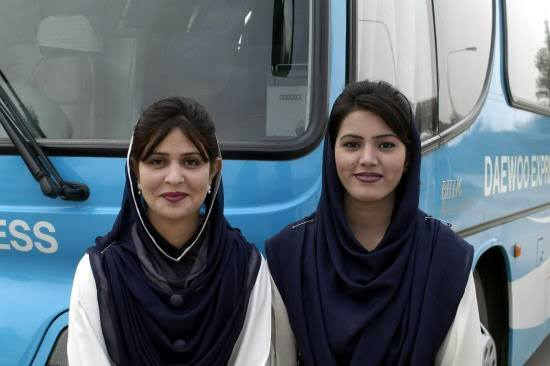
    A metaphor, I think, is like a pretty-faced road-hostess employed by the Daewoo bus service in the early aughts for the first time in Pakistan in an attempt to offer the luxury of female companionship to the middle class man who could not afford to travel by air. The poor girl had the difficult job of serving meals from a two-feet wide bus-aisle (which became narrower with the protruding shoulders of wildly entertained men who had never before enjoyed such intimacy with a presentable woman) while scrambling for balance on a bumpy ride sponsored by the typically pot-holed roads of Pakistan. Too often, she would spill a drink on an angry passenger or fall herself in the lap of an elated one. Just like that, a metaphor has the capacity to upset or delight; and it never serves the meals alright but that’s not the point anyway.

    In the early aughts, the Daewoo bus service climbed to the very top in Pakistan by offering the luxury of female companionship to a conservative, middle class gentry.

    BTW did i just coin a metaphor for the metaphor?

    In the past, I have compared life to the experience of reading an old book for the second time. This metaphor is about the cluelessness of us all in the face of life’s exoticity and the value of experience. I also found rusting cars by the roadside dumps too metaphorical for life’s evanescence. Today, I am here, because I think I have found yet another metaphor. While going through my archives on Google Photos, I came across this video I shot of Bahawalpur Station as the train slowly chugged out of it.

    The vaults and arches accentuated by sensible lighting revive the dated glory of Mughal architecture in a magical summer Bahawalpur night. As the train whistles out of the station, it almost looks like a scene from Alif Laila. But it’s neither for the beauty of the railway station nor for the spell of the Cholistani summer night that I am recalling that moment rather for the accuracy of the metaphor that this fleeting glimpse can offer for life.

    Life is continuously drifting away, or maybe, it has always been there and it’s just us that are chugged away. Nevertheless, life’s heart stopping beauty is but there for a fleeting moment; never to be possessed but just to be beheld and wondered at. Its mysterious, colorful characters would remain shrouded in mystery and draped in colors and you would never be able to tell you know any of them completely even if they happen to be someone you’ve grown up or spent your life with. There would never be enough time to seek the hidden treasures the majestic palace across the platform seems to offer, unless you want to risk letting the train leave without you.

    The best way to live, if you go by this metaphor, is to look out the window, inhale the warm air laden with moisture and the sweet aroma of traditional South Punjabi food, wonder at the walking stories and be in perpetual awe. May be ask yourself if you wish to disembark and be lost among the Alif Lailvi characters for a while since there will always be the next train for you to catch.

  • Inconsequential

    Inconsequential

    There’s nothing more contemplative than the quiet weekend mornings of my grandmother’s home where the solemn silence is only broken by the occasional distant bark of a stray dog or the delightful chirps of house sparrows inhabiting the twenty-year old Evershine tree in her front yard. It’s been over an hour since the fast has closed, everyone except Nani Ami and I has gone back to sleep off the weekend morn, and the sun has risen from somewhere you cannot tell since there are several-storeys-tall residential complexes all around our small, independent house, perhaps the only one left in the rapidly commercializing neighborhood now.

    Nani Ami’s iconic grille gate and Evershine tree in one frame

    I lean on one of the many wooden takht beds placed artfully around her house and think that there are really just two ways of getting older in life; allowing the currents of time to deepen your convictions and mold you into a person with a very specific identity or letting experience wash over the rocky cliffs of Belief, defacing the defining features to turn you into an observer of events having no desire to participate in making things happen and only a vague desire to watch them take place. With every passing year, I’m drifting towards the latter way and I’ve come so far that, traditionally right or wrong, it all appears the same to me.

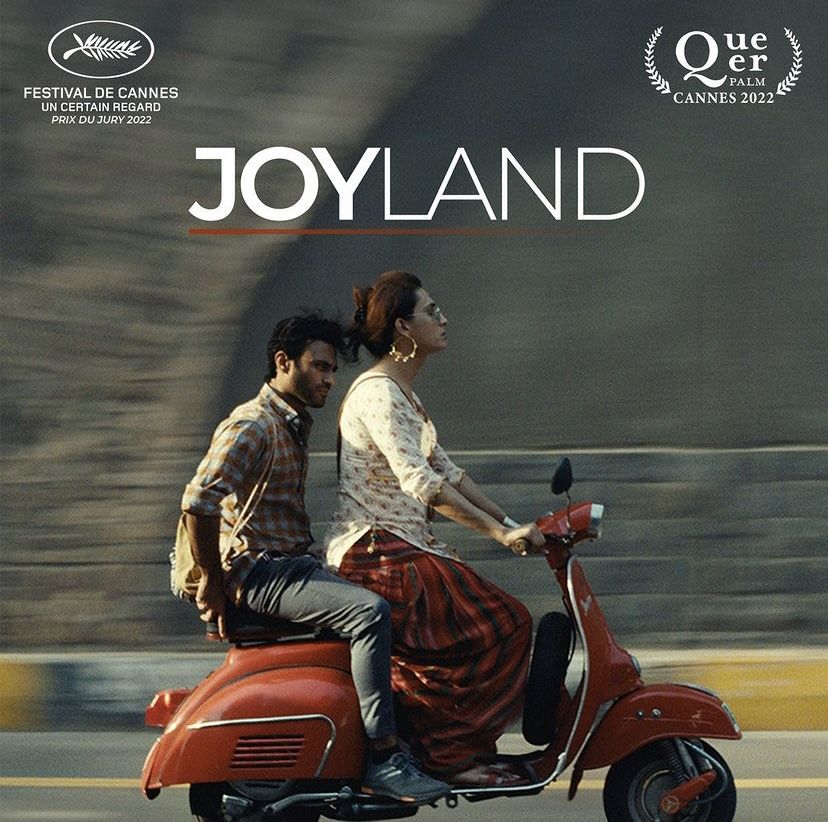
    As someone with historically religious inclinations, my reaction to Joyland, a Pakistani movie hailed in the West and banned in Pakistan for exploring the taboo of transgender love, even shocked me too. In the aftermath of the movie release, I remember failing to take a side in the debate that ensued over the ‘morality’ of the movie’s content in particular and the legitimacy of LGBTQ movement in general. I watched in fascination as friends and family attacked it vociferously for promoting vulgarity, and wondered if they had derived all that passion from their faith, upbringing, education or experience. For me, it was a story that was artfully narrated; and stories are simply above right and wrong. For most people though, this comment of mine was merely an escape from a conversation that demanded one to pick a side, and that I lacked original opinions on complex subject matters.

    Increasingly, I have come to believe this to be true. In order to have an opinion on something, you have to have a compass which, like all functional compasses, should tell you one direction instead of several. I had that compass once but it was so self-righteous and intolerant (also, it broke a precious heart) that somewhere along the way, I think I just chucked it. There’s a cost to it though: if you’re too sympathetic of a kaleidoscope of opinions to pick one and eliminate the rest, you’re simply just inconsequential. As mortals, shouldn’t we all afraid to be precisely that, inconsequential?

    Am I?

  • On Lost People

    On Lost People

    Some people just vanish into thin air after you’ve come to fancy them. Others don’t exactly vanish but they let something die / break / crystallize in them which makes them unrecognizable. Either way, you lose someone you cared about, a part of yourself and a possibility of being someone different through them.

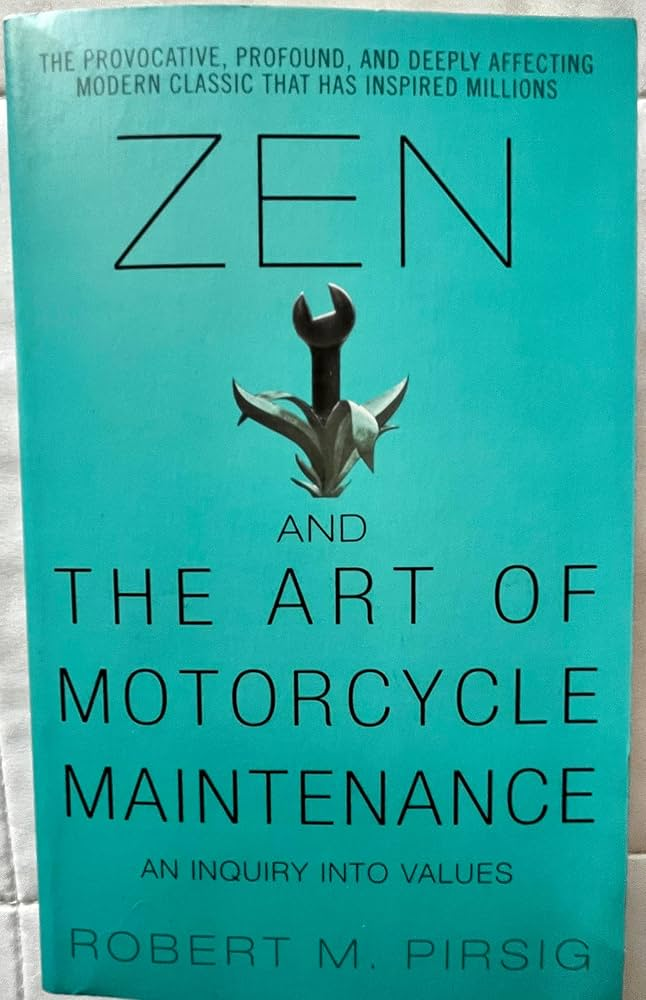
    There was this one guy from university hostel who used to be up early morning jogging and sparring (Muhammad Ali style) along the Bolan Rd / Indus Loop just when I stretched before my usual 5-miler at the Iqbal Square. On my tempo runs, I would pass him by, grunting out a salam while he carried on boxing with an imaginary rival. Later, our interests converged on a religio-political philosophy thanks to an active proselytizing circle on campus. He was different in some really fundamental way that I can vaguely recall now since it’s been a decade I have seen or talked to him. One thing that I do remember is him being very passionate about Robert Pirsig’s book, Zen and the Art of Motorcycle Maintenance which struck me as quite an odd thing, and hence, charming. A guy training as an electrical engineer has to be quite extraordinary to find passion in a philosophy book. And to vanish so completely in this age as to not leave a trail.

    Zen and the Art of Motorcycle Maintenance quickly became my favorite book too. I am onto reading it for the fourth time as of March 2026.

    I have known other remarkable people who have stuck around only to change so much that they might as well be total strangers. They are old colleagues, fellow bloggers, class fellows, and sometimes, even family. At the risk of appearing needy and clingy, I think you should keep prodding them until you get your person back out of them. Your attempt to connect / reconnect can be spurned or worse, ignored hurting some self-esteem (or whatever it is they call it these days which keeps people from connecting with other people). Doesn’t the myth that most valuable treasures are guarded by most poisonous snakes teach some valuable lesson? One must ask oneself what’s more important in the long run; false satisfaction of a misplaced ego or a cherished life-long connection. That’s coming from an introvert btw if that adds any more weight to it.

  • My Batman

    My batman is not perfect.


    When he comes over to deliver groceries,
    he calls me enthusiastically to the door
    to ramble about his old travels,
    majestic places he’s been to when he was a truck driver
    in the wild west of Pakistan,
    repairs that my old car perpeptually needs,
    or simply to tell me he saw me on my way to office,
    while returning from his night shift,
    with a sparkle in his eyes and a childish smile—
    one that I don’t return, and can’t,

    as if I were his friend and not his boss,
    as if I could ever be anyone’s friend.


    And yet, my batman is flawed.
    Sometimes he borrows and forgets to return,
    fails to clean the house and water the plants when I’m away.
    Sometimes I catch him staring at my wife’s butt
    when she turns in the kitchen or walks away.
    He steals from the refrigerator too—
    a spoonful of leftover kheer or stale rice from the night before.

    But that’s just about the list of his petty crimes.


    The way his eyes crinkle around the corners when he smiles
    reminds me of a childhood that seems so distant now,
    of the days when I could smile and mean it too—
    when I had friends who saw me as a friend,
    before I had drifted into the shelter of solitude.
    Sometimes when he worries that my status might shield me
    from the universal Experience of a common man,
    he shares the simple truths he’s picked up
    on his truck journeys, inn stays and broke days,
    wrapped in exotic tales and queer jokes
    that he delivers with a slap on my thigh.


    On summer afternoons, when he lifts his arm to lean on my door,
    his lack of body spray becomes noticeable,
    and reminds me of the class difference between us,
    making me wonder if it’s all cosmetic—
    if we are indeed the same beneath our clothes and perfumes,
    and spend so much and entire lives to forget that.


    His ability to see me as a person before his boss,
    and his courage to entertain the possibility
    of so much as a friendship between us,
    is something I deeply admire,

    because it’s something I lost long ago.


    My batman is not perfect. But maybe I never was, either.

  • Surreal

    Partly because the sleeping beauty resting in the snowcapped mountains looked stunning in her new white wardrobe, partly because the low hanging clouds huddled together to look like a giant fluff of cotton candy from the cockpit, partly because the piercing though strangely welcome cold was vaguely reminiscent of all the places I could have been and partly because the dome-shaped Gol Canteen’s hearty breakfast of anda channa and creamy tea with rainbow-colored froth warmed me up to the cold outside, I descended into a reflective, almost meditative mood after landing in Quetta and felt the urge to write. Sitting in the heated room with a vase-shaped lamp lit up dimly in a corner and an expansive window overlooking the dark, overcast day and a giant mountain just standing grimly and letting gray clouds float above it, I feel a mix of many emotions which, were they to be defined in a word, could be summed up in nothing short of ‘gratitude’.

    Strange how an encounter with Beauty makes one want to worship or at least, be grateful to some higher entity that afforded that encounter. It’s almost an involuntary reaction, as swift and natural as scrambling for balance when falling or crossing your arms when cold. I know the excitement is going to wane in my weeks of staying here, the welcoming cold would start to bite, the snow-capped mountains would become drab, and the sleeping beauty and her outfit would no longer look stunning, if I still trace her figure in the mountains at all.

    In fleeting moments like these, when there is no rush to get anywhere, the cognition of the surrounding beauty is overpowering, my mind is not drifting elsewhere and I don’t desire anyone or anything that’s not right before me, that I truly feel in the moment right where I actually am. I hope as the years go by, this blog entry reminds me of my early enchantment with the wintery Quetta and helps to preserve it for a little longer.

  • On Sea and Nostalgia

    On Sea and Nostalgia

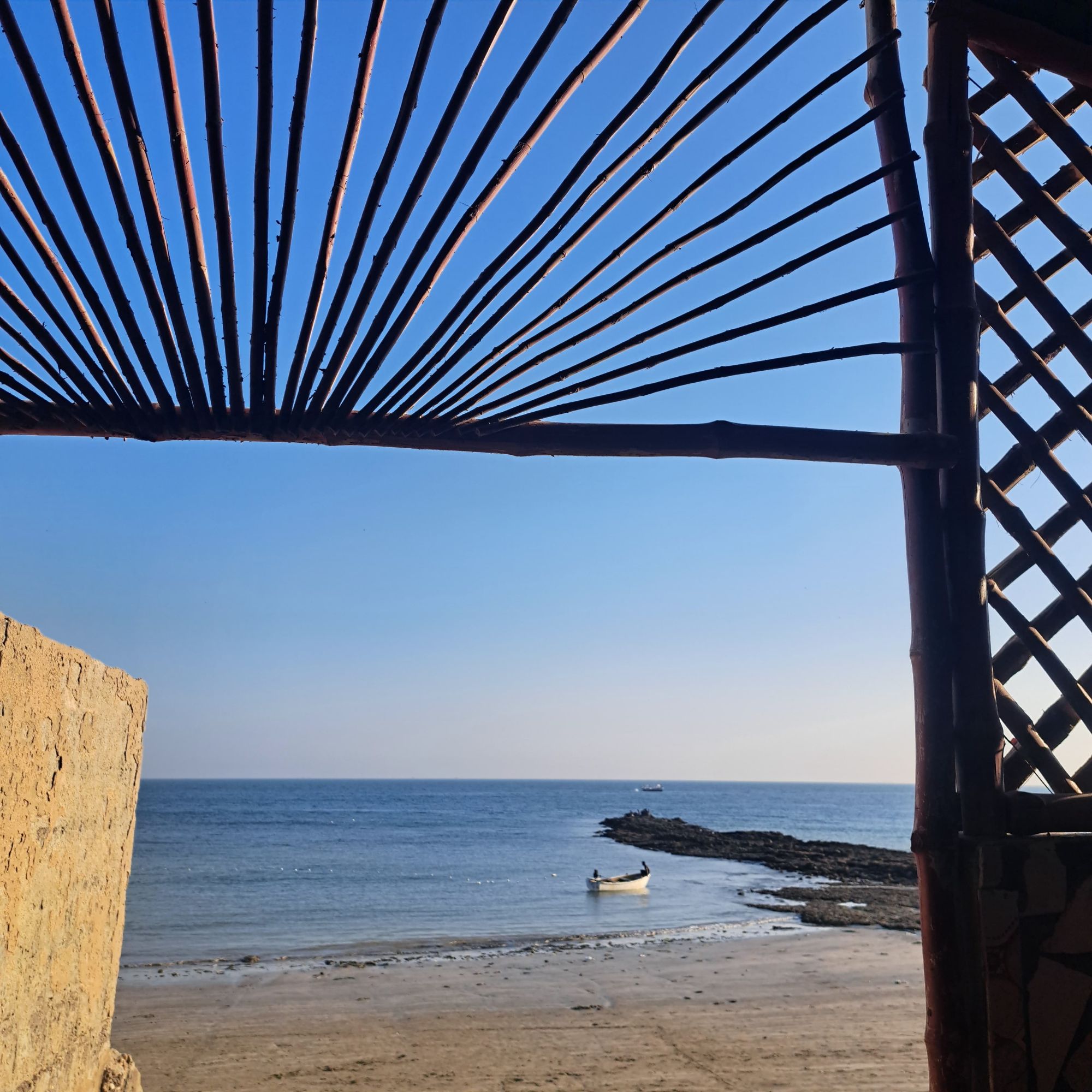
    The Nani Ami’s house turns dark and cold in Karachi’s winters. Back in childhood, I could not imagine that sunlight would ever go scarce in a house that had large open verandahs on its front and back. When we visited from South Punjab during summers, the image of white curtains and bedsheets fluttering in the seawind breezing through Nani Ami’s west-open house that lay before us drenched in a nice warm tinge always cast a spell on me and promised a summer filled with adventure.

    Times have changed and Karachi’s uncontrollable Frankenstein of commercialization has successfully turned the diverse neighborhood of low-walled houses painted in sprightly colors and adorned with trees and leafy plants into ominous uniform megastructures whose bold edifices look cold and alien, and block all the sunlight from the sparse independent houses that still remain. Wrapped in blankets, trying to fight off the melancholic gloom that accompanies the cold darkness, we curse the tyrannical manifestations of capitalism at our doorstep and long for freedom. Someone said, ‘Hawkes Bay?’ and we all cried in unison, “Yes, please!”

    Thanks to a rapidly piling list of epic adventures that our group of maternal cousins including their families had been logging lately, we were not afraid to pitch the idea to them first and see if it garnered interest. Their keen response sent us in a flurry of preparations necessary for a picnic on the beach. The night before, a Hiace had been rented, attires decided upon, a football packed in, and we were pretty much go for the day ahead. The cousins joined us the next morning with a cricket bat, badminton rackets and an assortment of indoor card and board games. Soon we piled up into the Hiace which, despite our doubts, proved spacious and sufficiently comfortable for our purposes. The formidable driver glided over the potholed roads of Karachi. A fateful turn towards the Turtle Beach proved disappointing with its nondescript beachfront and pocket breaking hut rents. We now turned to the Hawkes Bay, missed it once, almost barged into the French Beach but were fought off by the valiant guards protecting elite interests from commoners, returned once again to the Hawkes Bay and eventually found a budget-friendly hut with an exotic beachfront (after at least half a dozen hut evaluations). Without wasting a second, we offloaded, tiptoed over the round ocean stones and ran off in the warm sand to the shimmering blue calling waves.

    The sun shone brightly and we were so deprived that the kids rolled on the sand and made sandcastles, couples walked hand-in-hand along the waves lapping up against their feet, then we all played cricket and dodge-the-ball, and juggled some football. The fair ladies shrugged off the looming threat of sunburn and turned the beach into a show of colors with their spectacular cricket performances. The Biryani from the nearby hotel shack tasted delicious and so did the evening tea with baqir khanis. From the beach, a long brown rock pier trailed away from the sand and the civilization behind it, into the majestic sea now reflecting a deeper shade of blue in the slanting rays of the sinking sun. As it began to cool off, we all headed to the rock pier to spend our final moments reflecting on the nature and capturing it in our camera frames.

    Since Nani Ami believes in leaving a place better than one entered it which also strikes a chord with me, we did our bit in cleaning the beach and picked some 25 kg of plastics and fishing net out of the sea.

    The city remained in turmoil that afternoon as more protests erupted due to mass killings of an ethnic minority last month. I reached home safely thanking God for being given another day and wondering if all Karachiites develop some sort of religious disposition and learn to be grateful for, what the first world may consider, ‘as little as’ merely survival. As I continue to reflect on where I want to settle and put down my roots, Karachi remains a formidable candidate in a list of international cities. May be I can live and thrive and escape harm my entire remaining life in a city fraught with violence as I did yesterday. Regardless of what the future holds, this fantastic trip has largely allayed my crippling fear of moving with the family in Karachi for now, not because the security situation has gotten any better but because I’m finding it home.

  • Androidless

    It’s been five months since I have dumped my android phone. It just now occurred to me that my unplugging, though inadvertent, is an odd thing in a world embracing increasing connectedness and immersive technologies. Suspecting that this could be an important milestone of my life, I reflect here on how this change came about and has played out so far.

    It started when my phone screen died and unlike the last time, would not revive by tinkering the LCD flex cable. I was told that I’d have to have my screen replaced and should not expect to find a cheap or an original one. The idea of a pricy, unoriginal screen for my phone put me off so much that I postponed the job altogether, and decided to use my Nokia set for all practical purposes until I found a way out. Leaving the mobile repair shop without my phone fixed felt like I was botching my entire life over a silly Quality concern (yes, Pirsig’s voice from Zen and the Art of Motorcycle Maintenance has been a loudspeaker in my head over these past couple of months – more on that later). But like a lot of my life’s decisions that I have taken against my better judgment and that have taken me places, I decided to venture into the great dreaded unknown of the android-less existence anyway.

    Since my workplace applications run on internal servers and networks, it didn’t hurt professionally to not have a handheld device 100% of the time. With no professional obligations at stake, I realized my life was not that botched as I had thought after all and the practical purposes the Nokia set was to suffice were not coming out of Pandora’s Box either. Soon the day’s routines were being met through good ol’ messages and calls. What followed from there was a gradual, convenient resettling into old, familiar ways. Considering that I had bought my first android phone in 2015 which I was also robbed splendidly of the very first day, I didn’t have decades of addiction to feel substantial withdrawal symptoms. Though I now felt ’emptiness’ at times, it only led me to think more independently; something that I now realize I had hardly been doing anything of lately in the notification- and ad-driven frenzy that even a tech-conservative like me was not totally immune to. At the risk of sounding like a tech-cursing twentieth-century ancestral spirit, let me just say here that life is not a dopamine-fueled dragon ride all the time and one must learn that at some point in one’s life.

    Have I become a tech-hater now? Absolutely not. I think that tech has helped us understand and solve complex problems, reduce social disparities and elevate lifestyles in general, and to discard it altogether because of its latent dangers would be unfair, at best. Instead, a more sound approach would be to approach technology in a selective way. You pick all that’s good and leave out all that’s not. For that, you need to analyse what works for you and hence, is good for you and what doesn’t, and hence, is bad. For me, immersiveness is the true villain in the tech-story. As long as we are at the wheel, technology can be a pretty exciting and empowering friend to have. The whole problem of tech is its control issues because it doesn’t let you be at the wheel for long. Soon a notification pops up here and an ad there, and poooof, you’re an Alice in Wonderland. Once you remove mobile phone from the context, you take away half the tech’s immersiveness, making it an acceptable bargain.

    What difference has going off-the-grid made for me? I think this is an important question and I am still crafting a reply to it. Without a phone, I have loads of time on my hands that I’m still figuring out how to use constructively. Connectedness is going to be the chief challenge, I guess, since I am still struggling to keep in touch with people I really care about five months out.

    But I am certain I’ll find a way.

  • A Conversation on Love

    Just wanted to post a tiny snippet of a conversation I had with my grandmother today. It may look like a trivial thing but quality conversation is so rare these days that I really cherish and try to preserve it when I have one.

    We were listening to Jagjit Singh’s ghazal,

    ہوش والوں کو خبر کیا بےخودی کیا چیز ہے

    عشق کیجئے پھر سمجھیے زندگی کیا چیز ہے

    “The sensible will never grasp the state of ecstasy;
    Dive into love, and learn what life can be.”

    when she exclaimed how volumes of timeless poetry had been written by men head over heels in love but when some of the same men eventually found or married their love, they were unable to live up to the romanticized unions of their own poems.

    I agreed with her acute observation and marveled at her ability to note such an objective point while listening to, and appreciating, the lyrical rendition of Nida Fazli’s celebrated poem. I responded,

    Women and men make classic, tantalizing milestones in each others’ journey of Love. The destination of Love continues to be someplace else though. In a higher calling than flesh and blood.

    She fell quiet for a moment then responded aptly with the following verse of Iqbal:

    متاع بے بہا ہے درد و سوز آرزو مندی

    مقام بندگی دے کر نہ لوں شان خداوندی

    “The true treasure glows in longing’s secret blaze;
    I spurn the loftiest rank, preferring humble ways.”

    I think all great poets and philosophers have pondered upon the remarkably evident thirst that women and men fail to satisfy in each other in the name of love. Love, like unquenched fire burning in the very center of one’s being, demands desperate action. Iqbal, in this verse, holds this suffering dearer than any material or spiritual wealth. Knowing its subject (God, woman, etc.) though cannot alleviate the pain, it can certainly impart the sense of it being worthwhile thus, making it more tolerable, and even, enjoyable for some as it’s in the case of Iqbal.